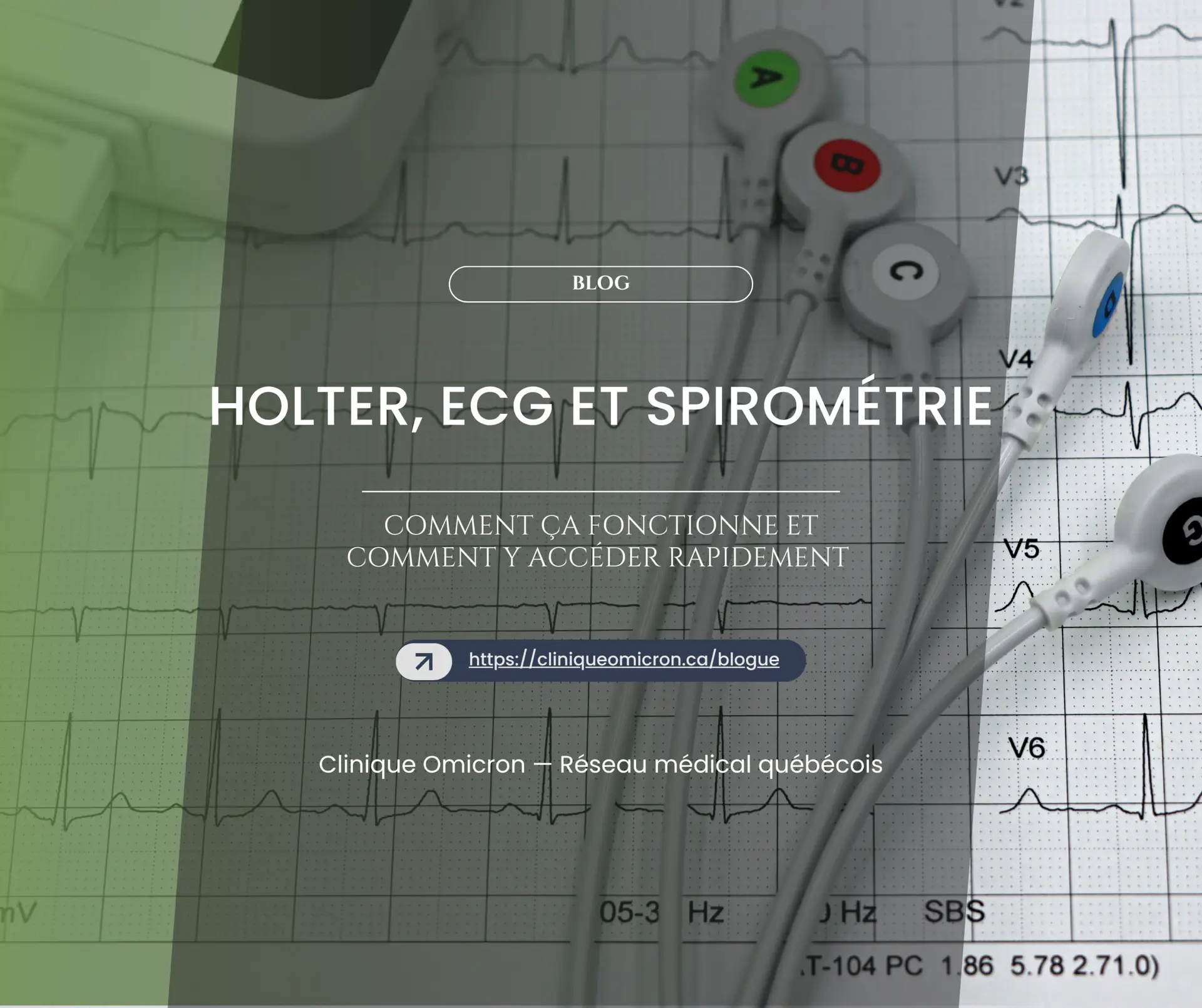

Are you experiencing heart palpitations, unusual shortness of breath, or has your doctor noted an abnormality during a physical exam? Three medical tests are particularly useful for investigating these symptoms: the Holter monitor, the electrocardiogram (ECG), and spirometry. In Quebec, these tests can be obtained within a reasonable timeframe at a private medical clinic, without waiting weeks in the public system.
The Holter monitor: monitoring the heart for 24 to 48 hours
The Holter monitor is a device for continuously recording the heart's electrical activity, worn for 24 to 48 hours (and sometimes up to 7 days for long-term monitors). Unlike a standard ECG, which captures only a few seconds of activity, the Holter allows for the detection of intermittent arrhythmias that may not necessarily appear during the examination.
What symptoms is it prescribed for?
- Palpitations or a sensation of irregular heartbeats
- Syncope or brief loss of consciousness episodes
- Unexplained dizziness
- Unexplained shortness of breath
- Follow-up of antiarrhythmic treatment
- Evaluation after cryptogenic stroke (to look for atrial fibrillation)
How does the exam work?
Electrodes are placed on your chest and connected to a small recording device that you wear on your belt. The setup takes about 15 minutes. During the recording period, you will continue your usual activities, noting any symptoms you experience in a journal. You will only avoid baths, showers, and water activities for the duration of the test.
The Electrocardiogram (ECG): The Basic Cardiac Test
The standard resting ECG records the electrical activity of the heart for a few seconds using 10 electrodes placed on the limbs and chest. It is a quick (5 to 10 minutes), painless, and risk-free examination. It can detect:
- Cardiac arrhythmias (atrial fibrillation, conduction blocks, etc.)
- Signs of ischemia or infarct (active or past)
- An enlargement of the heart chambers
- Severe electrolyte imbalances
The ECG is often the first test requested during a consultation for cardiac symptoms, but also as part of a pre-operative health check-up or occupational medicine.
Stress test
To evaluate cardiac tolerance to exercise and search for myocardial ischemia, a stress ECG may be prescribed. This test is performed on a treadmill or exercise bike under continuous medical supervision. It is indicated in particular for individuals with cardiovascular risk factors who wish to resume sports or in whom angina pectoris is suspected.
Spirometry (Pulmonary spirometry): assessing respiratory function
Spirometry, also known as pulmonary function testing (PFT), measures the volumes and flow rates of air your lungs can generate. It is the gold standard test for diagnosing and assessing the severity of obstructive (asthma, COPD) and restrictive lung diseases.
When is it prescribed?
- Unexplained chronic cough
- Persistent shortness of breath or shortness of breath on exertion
- Wheezing
- Diagnosis or monitoring of bronchial asthma
- Diagnosis or monitoring of COPD (chronic obstructive pulmonary disease)
- Preoperative assessment before major thoracic or abdominal surgery
- Monitoring of workers exposed to toxic dusts or gases
How does the exam work?
You will be seated in front of a spirometry device with a mouthpiece. The technician or doctor will ask you to perform several breathing maneuvers: a maximal inhalation followed by the fastest and most complete forced exhalation possible. The maneuver is repeated 3 times to ensure reproducible results. The examination takes approximately 20 to 30 minutes.
Spirometry preparation
If you use bronchodilators (inhalers), your doctor will tell you if you should avoid them a few hours before the test. Avoid smoking, strenuous exercise and heavy meals for 2 hours before the test.
Results and interpretation: the role of the physician
The results of the Holter monitor, ECG, and spirometry are raw data that require medical interpretation based on your clinical context. A normal Holter does not rule out a rare paroxysmal arrhythmia, and spirometry within normal limits can coexist with asthma if the test was performed outside of an attack.
The doctor who prescribes these tests is responsible for interpreting them in the light of your symptoms, history and overall clinical picture. In the event of abnormal results, he or she will refer you to the appropriate specialist: cardiologist, pulmonologist or thoracic surgeon.
Omicron Clinic
Need to consult a doctor?
In-person or via telemedicine, anywhere in Quebec.
We accept insurance. Telemedicine consultations available 7 days a week. No family doctor required.