
Contraception is no longer just about the pill. In 2026, Quebec women have access to an extensive range of contraceptive methods, from the most discreet to the most definitive, and from hormonal to entirely non-hormonal options. Yet, many continue to use the first method offered to them without ever reassessing alternatives, either because they are unaware of all the options or because they haven't had the opportunity to discuss them with a healthcare professional in a relaxed setting.
The choice of contraception is personal. It depends on lifestyle, medical history, whether or not a pregnancy is desired in the short or medium term, and individual preferences. What works for one person doesn't necessarily work for another.
Oral hormonal methods
La pilule combinée, qui associe un œstrogène et un progestatif, reste la méthode hormonale la plus utilisée. Elle offre une efficacité proche de 99 % en utilisation parfaite, régule les cycles, réduit les douleurs menstruelles et diminue le risque de cancer de l’ovaire et de l’endomètre à long terme. Elle comporte cependant des contre-indications importantes, notamment pour les femmes qui fument et ont plus de 35 ans, celles qui ont des antécédents de thrombose, une migraine avec aura ou certaines maladies cardiovasculaires.
The progestin-only pill, without estrogen, is an alternative for women for whom estrogen is contraindicated, particularly during breastfeeding. It is slightly less effective in typical use than the combined pill and requires a stricter fixed-time dosage for certain formulations.
Non-oral hormonal methods
The hormonal IUD, or levonorgestrel-releasing intrauterine device, is one of the most effective methods available, with a failure rate of less than 1 % per year. It is inserted in a clinic by a doctor or a nurse practitioner, acts locally by thickening cervical mucus and thinning the endometrium, significantly reduces menstrual bleeding, and can be left in place for three to eight years depending on the model. Insertion can be uncomfortable, but the contraceptive effect is immediate.
The subdermal implant, a small rod placed under the skin of the arm, releases a progestogen continuously for three years. Its effectiveness is comparable to hormonal IUDs. The vaginal ring and contraceptive patch offer alternatives to daily pill-taking, with cycles of three weeks of use and one week off.
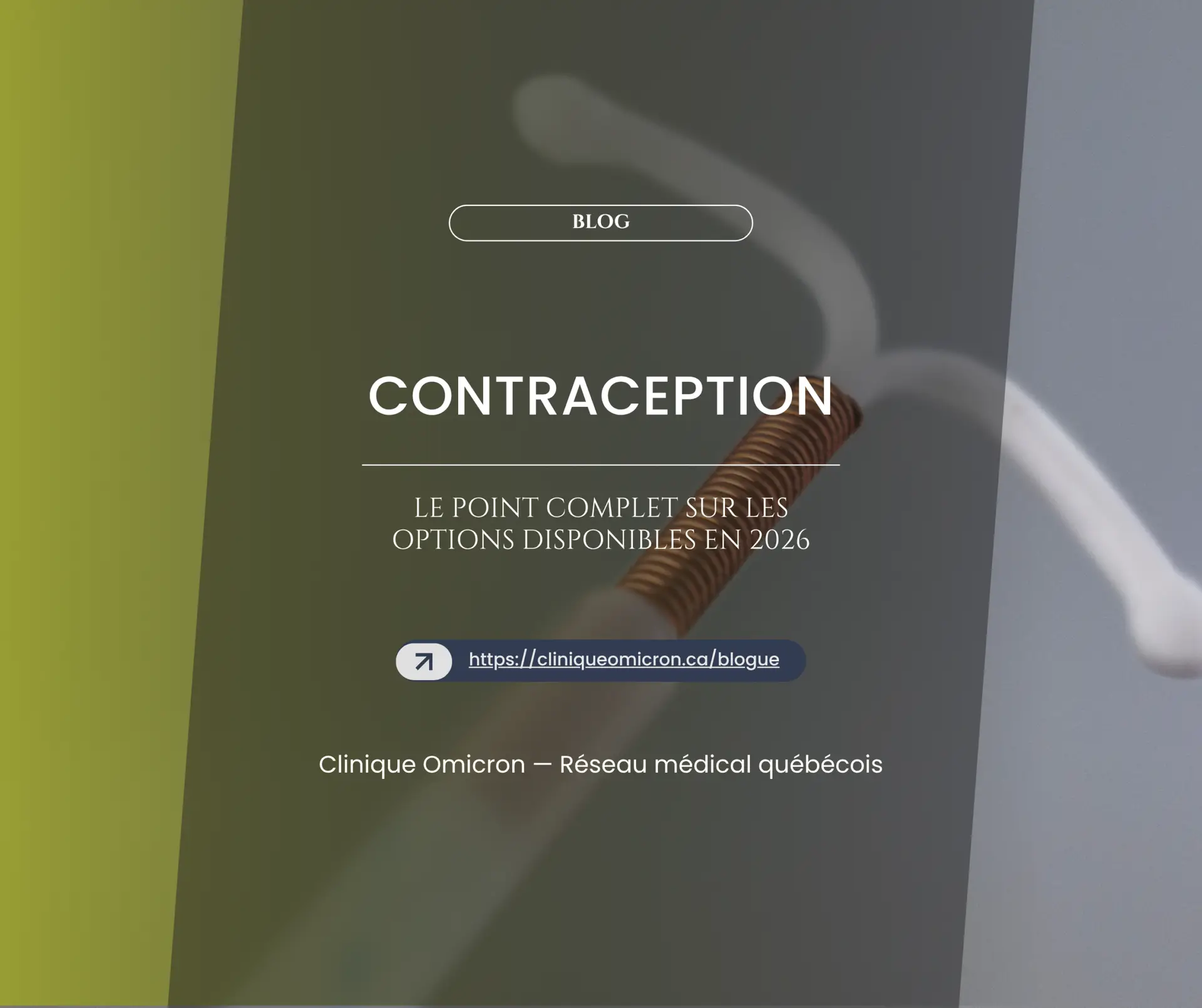
The copper IUD
The copper IUD is the most effective reversible non-hormonal contraceptive method. It works by creating a hostile environment for sperm using copper ions and can remain in place for up to ten years. It is particularly suitable for women who wish to avoid hormones or who have contraindications to hormonal methods. It can increase menstrual bleeding and cramps, especially in the first few months after insertion.
Used within five days of unprotected sex, the copper IUD is also the most effective emergency contraception method available, with a failure rate of less than 1 %.
Barrier methods and emergency contraception
The male condom remains the only contraceptive method that simultaneously protects against pregnancy and the transmission of STIs. Its contraceptive efficacy depends heavily on correct and systematic use. Hormonal emergency contraception, available without a prescription in pharmacies in Quebec, is most effective within the first 72 hours following unprotected intercourse, but can be taken up to 120 hours afterwards.
Definitive methods
Tubal ligation and vasectomy are surgical sterilization methods considered permanent, even though reversal is technically possible with variable results. Vasectomy is a simpler procedure, performed under local anesthesia as an outpatient, with a very low complication rate. These methods are reserved for individuals who are certain they no longer want children.
Frequently Asked Questions About Contraception
Does the pill protect against STIs?
No. No hormonal method protects against sexually transmitted infections. Condoms remain essential for this protection, regardless of the contraception used.
Is a prescription required for all contraceptive methods?
In Quebec, the contraceptive pill can be initiated directly by a pharmacist since 2023. Intrauterine devices and implants require insertion by a doctor or nurse practitioner. Emergency contraception is available over-the-counter in pharmacies.
Does fertility return quickly after stopping hormonal contraception?
For most hormonal methods, fertility returns within a few weeks to a few months after stopping. After removal of an IUD or implant, fertility is usually restored very quickly.
When to consult a healthcare professional
If you wish to change your method of contraception, if you are experiencing side effects with your current contraception, or if you are planning a pregnancy and wish to review your options before stopping contraception, a medical consultation is necessary.
A doctor or specialized nurse practitioner can assess your history, discuss options suited to your situation, and perform preliminary examinations if necessary. An in-person or teleconsultation at one of our Omicron Clinic in Quebec gives you quick access.
All our services
Omicron Clinic
Need to consult a doctor?
En clinique ou en télémédecine, partout au Québec.
Reçus pour assurances. Téléconsultation 7 j/7. Sans médecin de famille requis.