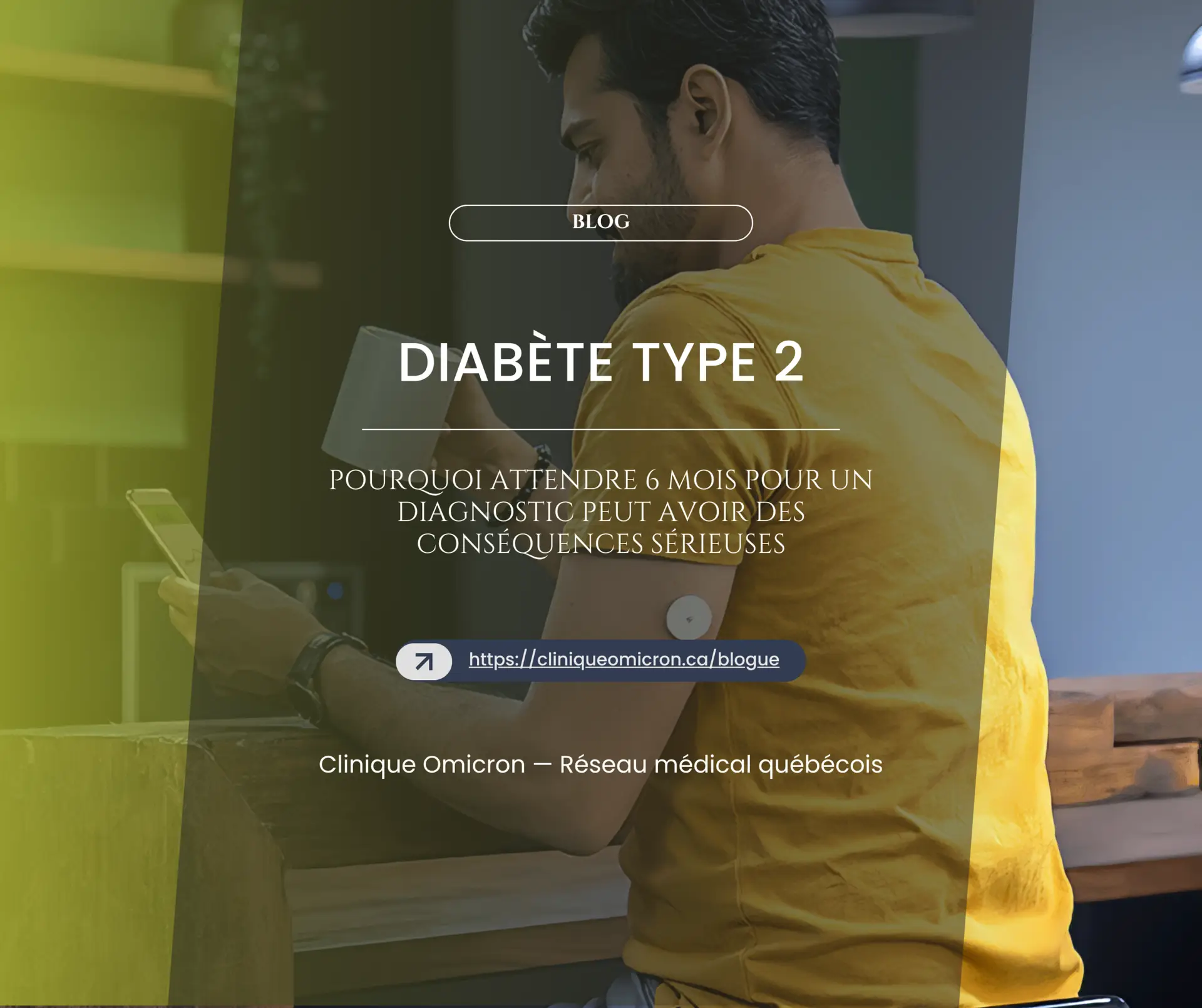

Au Québec, environ 900 000 personnes vivent avec un diabète de type 2 diagnostiqué, et on estime que plusieurs centaines de milliers d’autres l’ont sans le savoir (Diabète Québec, 2023). Le diagnostic change une vie, mais pas de la façon dramatique que beaucoup imaginent au départ. Le diabète de type 2 se gère. Pas facilement, pas parfaitement tous les jours, mais avec les bons outils et un suivi structuré, la plupart des personnes diabétiques mènent une vie pleine et active.
Ce qui change, c’est la vigilance. Une vigilance constante, intégrée dans le quotidien, qui finit par devenir une seconde nature pour beaucoup.
Ce qui se passe dans l’organisme
Le diabète de type 2 est une maladie métabolique caractérisée par une hyperglycémie chronique, c’est-à-dire un taux de sucre dans le sang durablement élevé. Contrairement au diabète de type 1, qui est une maladie auto-immune dans laquelle le pancréas ne produit plus d’insuline, le diabète de type 2 se développe progressivement à partir d’une résistance à l’insuline. Le pancréas produit toujours de l’insuline, mais les cellules n’y répondent plus correctement. Avec le temps, le pancréas s’épuise à compenser et la production d’insuline diminue également.
Une glycémie chroniquement élevée endommage progressivement les vaisseaux sanguins et les nerfs. C’est la source des complications à long terme : maladies cardiovasculaires, insuffisance rénale, neuropathie périphérique, rétinopathie et risque accru d’infection et de plaies qui cicatrisent mal. Ces complications ne sont pas inévitables. Elles sont largement évitables avec un contrôle glycémique adéquat et un suivi médical régulier.
Blood Sugar Management in Daily Life: Understanding Targets
Les cibles glycémiques pour une personne diabétique de type 2 sans complications majeures sont généralement une glycémie à jeun entre 4,0 et 7,0 mmol/L et une glycémie deux heures après un repas entre 5,0 et 10,0 mmol/L (Diabète Canada, 2023). Le taux d’HbA1c, qui reflète la moyenne glycémique des deux à trois derniers mois, est visé sous 7 % pour la plupart des personnes, avec des cibles ajustées selon l’âge, la durée du diabète et les comorbidités.
Ces cibles ne sont pas des absolus. Une personne âgée avec d’autres maladies chroniques aura des objectifs moins stricts qu’un adulte jeune en bonne santé générale. C’est le médecin ou l’IPS qui personnalise les cibles selon la situation réelle du patient.
L’alimentation, premier levier de contrôle
Aucun aliment n’est formellement interdit dans le diabète de type 2, mais la façon de manger influence directement la glycémie postprandiale. Les glucides ont l’impact le plus direct sur la glycémie. Leur quantité, leur qualité et leur répartition dans la journée sont des paramètres importants. Les glucides complexes à index glycémique bas, comme les légumineuses, les céréales complètes et la plupart des légumes, font monter la glycémie plus lentement que les sucres raffinés et les aliments ultra-transformés.
The distribution of meals throughout the day is also important. Skipping a meal to compensate for another creates significant glycemic variations. Regular, reasonably-sized meals spread throughout the day stabilize blood sugar better than large, spaced-out meals. Consultation with a nutritionist-dietitian can be invaluable for adapting these principles to the individual's practical reality and preferences.
L’activité physique comme médicament
L’exercice physique améliore la sensibilité à l’insuline de façon directe et immédiate. Une marche de 30 minutes après le repas peut faire baisser la glycémie postprandiale de façon significative. Sur le long terme, une activité physique régulière améliore l’HbA1c, réduit la tension artérielle, améliore le profil lipidique et contribue à la gestion du poids, autant de facteurs qui réduisent le risque de complications cardiovasculaires chez les personnes diabétiques.
L’objectif recommandé est de 150 minutes d’activité aérobique d’intensité modérée par semaine, réparties sur au moins trois jours. La résistance musculaire, deux à trois fois par semaine, complète utilement l’entraînement aérobique. Pour les personnes qui commencent de zéro, même 10 minutes par jour représentent un point de départ valable.
Structured medical follow-up
Un suivi régulier fait partie intégrante de la gestion du diabète. En pratique, cela comprend une mesure de l’HbA1c tous les trois à six mois selon la stabilité du contrôle glycémique, un bilan lipidique annuel, une mesure de la tension artérielle à chaque visite, un dosage de la créatinine et un rapport albumine-créatinine urinaire pour surveiller la fonction rénale, et un examen des pieds régulier pour détecter les signes précoces de neuropathie. Un examen ophtalmologique annuel est recommandé pour dépister la rétinopathie diabétique.
Frequently asked questions about type 2 diabetes
Can type 2 diabetes be cured?
Le terme rémission est plus approprié que guérison. Chez certaines personnes, une perte de poids significative et des changements importants du mode de vie permettent de maintenir une glycémie normale sans médication. Cette rémission n’est pas garantie et nécessite un suivi continu, car le risque de récidive persiste.
Tous les diabétiques de type 2 finissent-ils par prendre de l’insuline ?
Non. Beaucoup de personnes gèrent leur diabète avec des médicaments oraux ou des agents injectables non insuliniques pendant des années. Le recours à l’insuline dépend de l’évolution de la maladie, de la réponse aux traitements et des préférences du patient en accord avec le médecin.
Is type 2 diabetes hereditary?
Genetic factors play a role, but lifestyle habits are often more decisive. Having a diabetic parent increases the risk, but does not make diabetes inevitable, especially if preventive measures are taken early.
Peut-on boire de l’alcool avec un diabète de type 2 ?
Une consommation modérée et accompagnée d’un repas est généralement tolérée, mais l’alcool peut provoquer des hypoglycémies chez les personnes sous certains médicaments. C’est une question à aborder avec le médecin ou l’IPS en tenant compte du traitement en cours.
When to consult a healthcare professional
Si vous avez reçu un diagnostic de diabète de type 2 récemment, si votre contrôle glycémique vous semble difficile à maintenir, ou si vous présentez des symptômes inhabituels comme des épisodes d’hypoglycémie, des engourdissements aux pieds ou une vision floue, une consultation s’impose sans attendre le prochain rendez-vous planifié.
A doctor or a specialized nurse practitioner can review your treatment plan, adjust your glycemic targets, and refer you to support resources tailored to your situation. An in-person or virtual consultation teleconsultation dans l’un des points de service de Omicron Clinic au Québec permet d’y accéder sans délai.
Specialized medicine - Specialist physicians | Clinique Omicron
Omicron Clinic
Need to consult a doctor?
En clinique ou en télémédecine, partout au Québec.
Reçus pour assurances. Téléconsultation 7 j/7. Sans médecin de famille requis.