General Surgery — Condition
Inguinal hernia: private assessment and surgery
An inguinal hernia occurs when a portion of abdominal contents protrudes through a weak spot in the inguinal canal. At Clinique Omicron, our surgeons will assess your condition, discuss treatment options, and coordinate surgery and post-operative follow-up within our Quebec network.
Make an appointment
Understand the condition
What is an inguinal hernia?
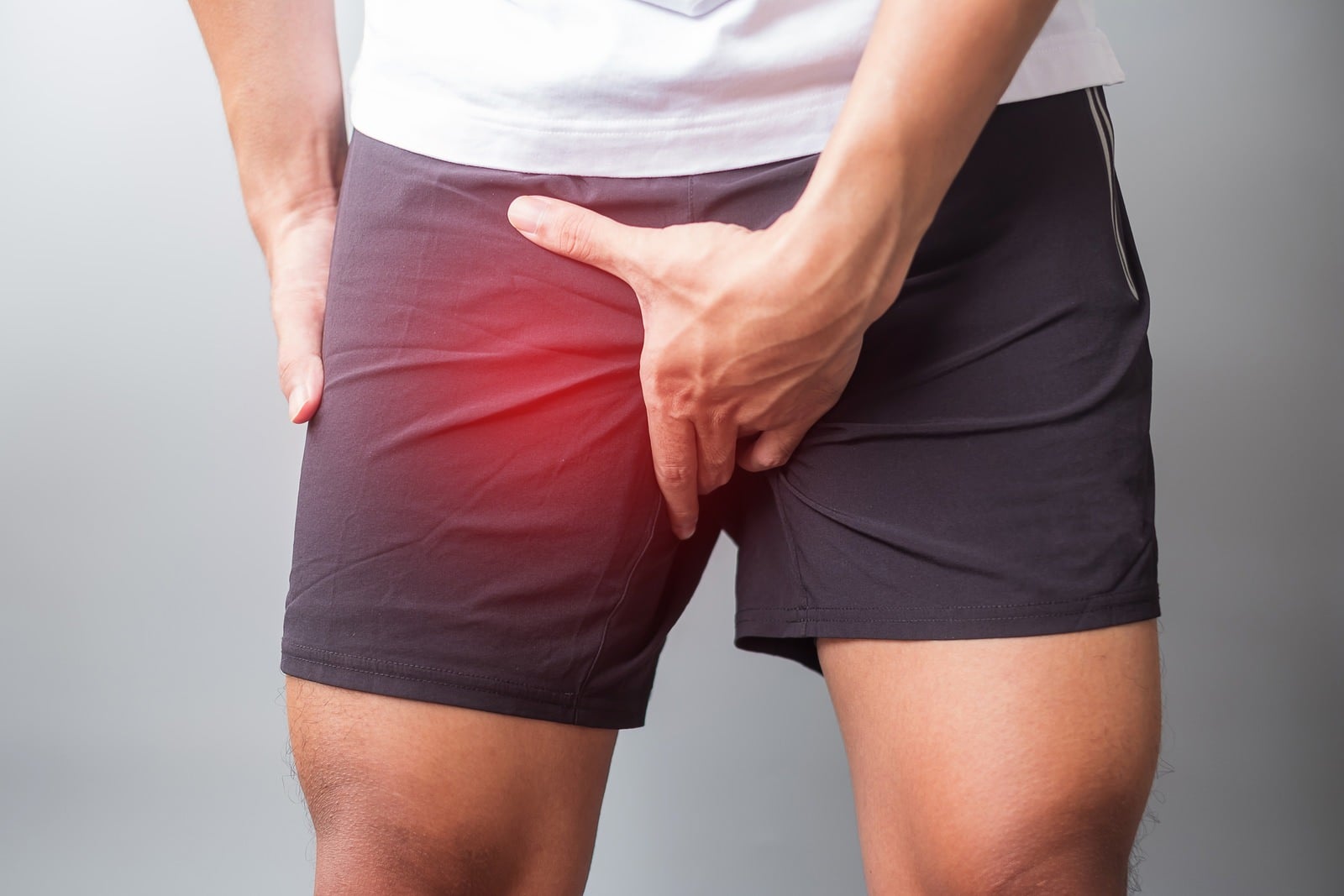
Inguinal hernia is one of the most common hernias in adults, particularly in men. It manifests as a bulge or swelling in the groin area, sometimes accompanied by discomfort during physical exertion, coughing, or prolonged standing. For physiopathological details, consult our Encyclopedic entry on inguinal hernia.
- Visible or palpable bulge in the groin fold
- Feeling of heaviness, tightness, or burning
- Discomfort exacerbated by exertion, coughing, or standing
- Sliding bolster in a supine position
- Dull pain radiating to the scrotum or thigh
- Progressive worsening of the bulge over time
- Hernia that has become hard, red, or very painful
- Nausea or vomiting associated
- Inability to reduce the hernia manually
- Fever associated with bulging
- Acute unusual abdominal pain
- Suspicion of strangulated hernia
Our approach
How is care provided at the Omicron Clinic?
Initial consultation
Clinical examination by our team of General surgery, Review of medical history and discussion of symptoms. Further imaging as needed.
Treatment plan
According to your condition: active surveillance, watchful waiting, or surgical intervention. The surgeon will present the available techniques and their benefits.
Post-operative follow-up
Wound care, pain management, and gradual resumption of activities. Follow-up possible at home via UVO throughout Quebec.
Why choose Clinique Omicron
Coordinated surgical care
- Private surgical assessment, outside the public network
- Consultation, imaging, intervention, and follow-up by a single team
- Direct communication with your primary care physician
- Teleconsultation for non-urgent questions and follow-ups
- Postoperative nursing care at home UVO
- Wound care, suture removal, monitoring of progress
- Operative report transmitted automatically
- Personalized recovery plan according to your activity
Associated Conditions and Useful Links
You could also consult for
Frequently Asked Questions about Inguinal Hernia
Everything you need to know about symptoms, surgical evaluation, intervention, and post-operative follow-up at Omicron Clinic.
An inguinal hernia typically manifests as a bulge or lump in the groin area, which can be seen or felt. It often becomes more prominent with exertion, coughing, or when standing, and tends to disappear when lying down. It may be accompanied by a feeling of heaviness, pulling, or burning, sometimes radiating towards the scrotum or thigh.
The decision to operate depends on the size of the hernia, the intensity of your symptoms, the impact on your quality of life, and the risk of complications such as strangulation. During your consultation, our surgeon will assess these factors with you and recommend either active monitoring or a surgical procedure tailored to your condition.
No. In adults, an inguinal hernia does not resolve spontaneously. It can remain stable for a while or progress gradually. Only surgery can correct it permanently. However, monitoring may be considered if the hernia is small, has few symptoms, and poses no immediate risk of complications.
The most serious complication is strangulation: the contents of the hernia become trapped, interrupting its blood supply. This results in a hard, painful, irreducible hernia, often accompanied by nausea and vomiting. Strangulation is a surgical emergency. Other complications include incarceration and intestinal obstruction.
Two main approaches exist: open surgery (Lichtenstein technique with mesh placement to reinforce the abdominal wall) and laparoscopic surgery (through mini-incisions). The choice depends on the size of the hernia, whether it is unilateral or bilateral, surgical history, and your general health. Our surgeon will present the most appropriate technique for your case.
The recovery period varies depending on the technique used, your physical condition, and the nature of your professional activity. A gradual return to daily activities is generally quick, while significant physical exertion requires a longer period. Our team will provide you with a personalized recovery plan after the procedure.
No. No referral is required to see a general surgeon at Clinique Omicron. You can book an appointment directly online, by phone, or by email. Our medical team will perform the initial evaluation and propose an appropriate treatment plan.
Inguinal hernia surgery is covered by the RAMQ when performed by a participating physician. At Clinique Omicron, certain assessments and procedures are performed privately to offer faster access outside the public system. The terms and conditions are clarified for you before any consultation. Consult our section Pricing for details.
Yes for initial orientation consultations, imaging or results review, and non-urgent post-operative follow-up. However, an in-person physical assessment is still required before any surgical procedure. Learn more about our service medical teleconsultation.
Our Service UVO — Home Care Offers post-operative nursing care throughout Quebec: wound monitoring, dressing changes, suture removal, care education, and early detection of complications. It's a convenient complement or substitute for clinic visits.
An inguinal hernia results from a weakness in the muscular wall of the groin, whether congenital or acquired. Several factors promote its appearance: repeated physical exertion, lifting heavy loads, chronic cough, constipation, obesity, pregnancy, or a history of abdominal surgery. Age and being male are also recognized risk factors.
It is not always possible to completely prevent an inguinal hernia, particularly when the abdominal wall weakness is congenital. However, certain habits can reduce the risk: maintaining a healthy weight, lifting heavy objects correctly, avoiding chronic constipation, strengthening the abdominal muscles, and treating a persistent chronic cough.