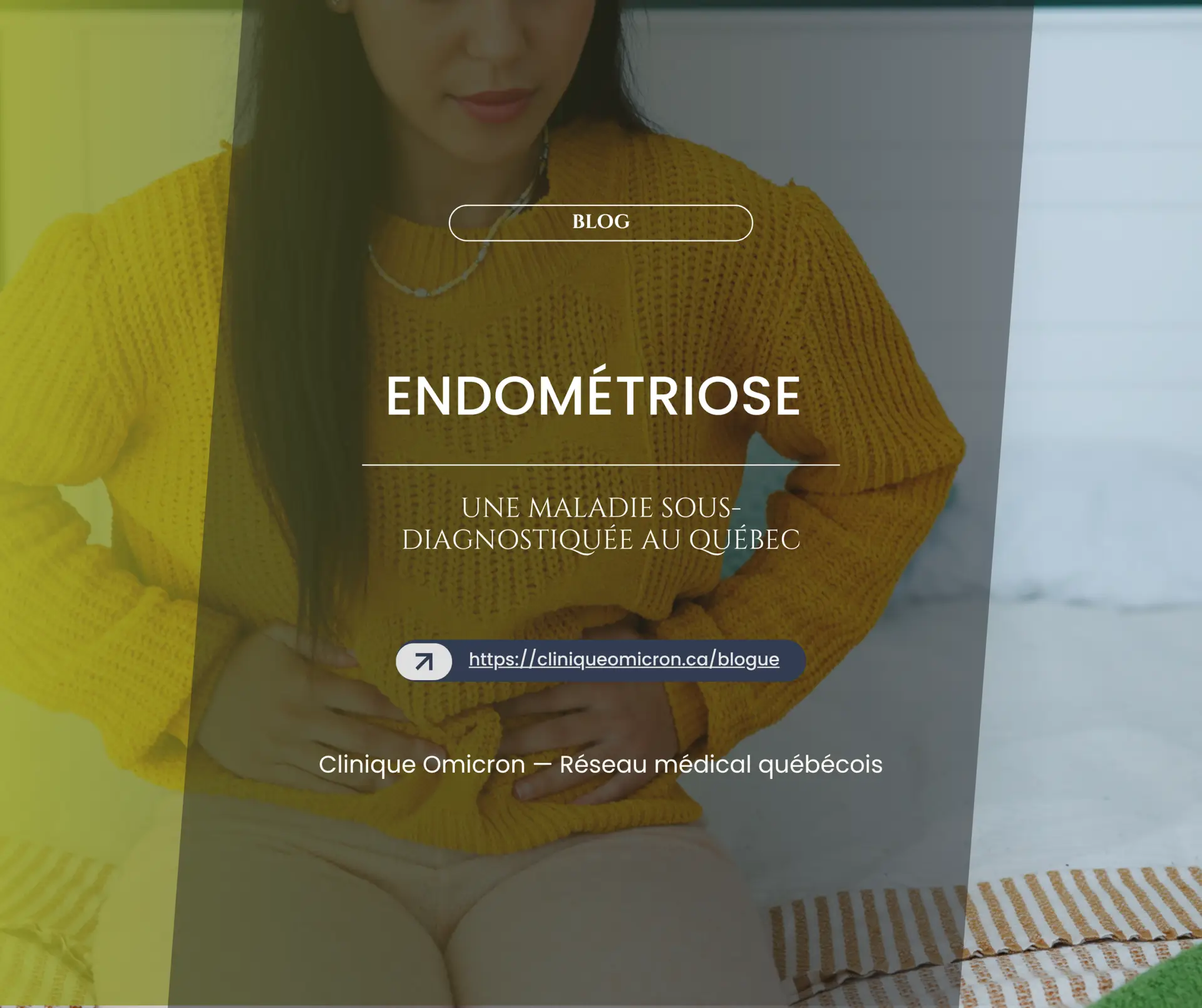

On average, it takes between seven and ten years to get a diagnosis of endometriosis in Canada. Seven to ten years during which many women are told that their pain is normal, that it's in their head, that they're exaggerating. This diagnostic delay is one of the most documented and concerning aspects of a disease that affects approximately one in ten women of reproductive age (Endometriosis Canada, 2023).
Endometriosis is not just amplified menstrual pain. It is a chronic inflammatory disease with real repercussions on fertility, quality of life, and overall health.
What endometriosis is
Endometriosis is a condition in which tissue similar to the endometrium, the inner lining of the uterus, grows outside the uterus. These lesions are most often found on the ovaries, fallopian tubes, pelvic peritoneum, and adjacent organs such as the bladder and intestines. In severe forms, they can spread to more distant structures.
Like the normal endometrium, these ectopic tissues respond to the hormonal fluctuations of the menstrual cycle. They bleed during menstruation, but this blood cannot drain normally, causing local inflammation, adhesion formation, and, over time, scarring that can distort pelvic anatomy.
Symptoms that warrant clinical attention
Dismenorrhea, or menstrual cramps, is the most common symptom, but not the only one. Chronic pelvic pain that is not limited to menstruation, pain during sexual intercourse, painful bowel movements or urination during periods, and chronic fatigue are frequent manifestations that warrant evaluation.
The intensity of symptoms does not necessarily correlate with the anatomical severity of the disease. Some women with extensive endometriosis have few symptoms, while others with superficial lesions suffer intensely. This variability contributes to diagnostic challenges.
Infertility is a common complication of endometriosis, present in about 30 to 40 % of affected women. It can be the first manifestation that leads to a consultation, especially in women who otherwise have few symptoms.
The diagnostic workup
Pelvic ultrasound can detect endometriotic cysts on the ovaries, called endometriomas, but it cannot visualize superficial peritoneal lesions. Pelvic MRI offers better characterization of deep lesions. Definitive diagnosis is based on laparoscopy with biopsy, a minor surgical procedure performed under general anesthesia that allows for visualization and removal of lesions.
The current trend is towards a more clinical diagnosis, based on symptoms and imaging, to avoid delays related to surgical access and allow for therapeutic management without waiting for histological confirmation in typical cases.
Treatment options
The treatment of endometriosis depends on the woman's goals, including her desire for pregnancy, and the severity of the disease. Medical options include combined hormonal contraceptives, progestins, and GnRH agonists, which suppress hormonal fluctuations and reduce lesion progression. These treatments are effective for symptoms but do not cure the disease and do not allow for pregnancy during their use.
Laparoscopic surgery can remove or destroy lesions and adhesions. It improves pain and can improve fertility in some cases, but the recurrence rate is significant. The management of endometriosis is often a long-term process that requires regular monitoring and adjustments as it evolves.
Frequently Asked Questions about Endometriosis
Does endometriosis disappear at menopause?
In most cases, symptoms improve after natural menopause due to the drop in estrogen. However, lesions do not necessarily disappear and can remain active in women undergoing hormone replacement therapy.
Does endometriosis increase cancer risk?
Certain forms of ovarian endometriosis are associated with a slightly increased risk of specific ovarian cancers, but this absolute risk remains low. Regular gynecological follow-up is recommended.
Can you get pregnant with endometriosis?
Yes, many women with endometriosis get pregnant. The likelihood depends on the stage of the disease, involvement of the fallopian tubes and ovaries, and other factors. A fertility evaluation can help personalize options.
When to consult a healthcare professional
If you experience severe menstrual pain that limits your activities, chronic pelvic pain, pain during sexual intercourse, or difficulty conceiving, a medical consultation is recommended to assess the possibility of endometriosis.
A doctor or a specialized nurse practitioner can perform an initial assessment, order imaging, and refer you to a gynecologist if necessary. An in-person or teleconsultation at one of our Omicron Clinic in Quebec allows you to start this process without delay.
All our services
Omicron Clinic
Need to consult a doctor?
In-person or via telemedicine, anywhere in Quebec.
We accept insurance. Telemedicine consultations available 7 days a week. No family doctor required.