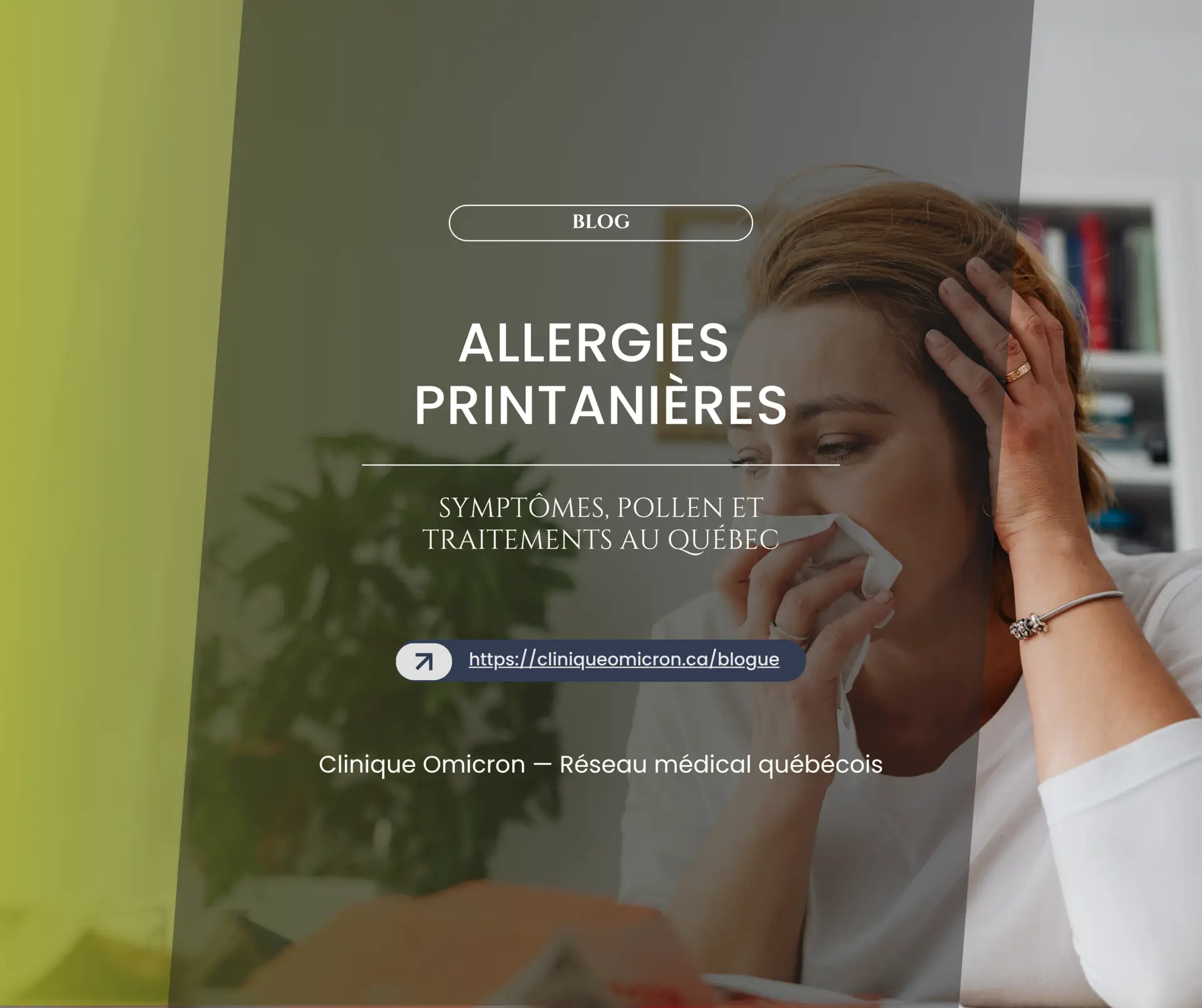

March arrives, birch trees begin to release their pollen, and for millions of Quebecers, familiar symptoms return: runny nose, itchy eyes, sneezing fits, irritated throat. Spring allergy season is one of the most difficult times of year for allergy sufferers, and it's starting earlier each year due to climate change, which is lengthening the pollen season.
In Quebec, approximately 20 to 25 % of the population suffers from seasonal allergic rhinitis, commonly known as hay fever (INSPQ, 2022). Many manage their symptoms with over-the-counter antihistamines, but a medical evaluation can provide access to more effective and targeted options.
The Quebec pollen calendar
In Quebec, the pollen season generally begins in March and April with tree pollens. Birch is by far the most allergenic during this period: it produces massive quantities of light pollens that disperse over long distances. Alder, poplar, maple, and ash also contribute to the spring pollen load.
In May and June, grasses take over, with a peak that can last for several weeks depending on weather conditions. Ragweed, responsible for a large part of autumn symptoms, begins to release its pollen at the end of July and peaks in August. Understanding at what time of year symptoms are most pronounced helps identify the responsible allergens and adapt management.
Typical symptoms of allergic rhinitis
Seasonal allergic rhinitis manifests as nasal congestion, sneezing fits, a clear and abundant runny nose, and itching of the nose, palate, and throat. Allergic conjunctivitis frequently accompanies these symptoms: red, watery, itchy, and swollen eyes. Significant fatigue, sometimes underestimated, often accompanies allergic rhinitis due to sleep disturbances and low-grade systemic inflammation.
In asthmatic individuals, pollens can trigger or worsen asthma attacks. Allergic rhinitis and asthma are two manifestations of the same respiratory disease in current understanding, and their coexistence justifies coordinated management.
Treatment options
Second-generation oral antihistamines, such as cetirizine, loratadine, and fexofenadine, are generally the first treatment used. Less sedating than first-generation antihistamines, they reduce nasal and ocular symptoms but do not directly act on nasal congestion. They are available over-the-counter and are more effective when taken preventatively, before symptoms appear, rather than in response to an acute episode.
Nasal corticosteroids, available by prescription, are the most effective treatments for moderate to severe allergic rhinitis. They act directly on inflammation of the nasal lining and reduce congestion, sneezing, and itching more completely than antihistamines alone. Their maximum effect is observed after several days of regular use.
For severe cases or those resistant to drug treatments, allergen immunotherapy, either through desensitization injections or sublingual tablets, can durably reduce sensitivity to allergens. It is the only treatment that modifies the underlying mechanism of the allergy rather than simply masking the symptoms.
Frequently Asked Questions About Spring Allergies
Can you develop allergies as an adult even if you didn't have them as a child?
Yes. Allergies can develop at any age. Moving to a region with different flora, a change in allergen exposure levels, or a modification of the immune system can trigger the onset of allergies in adults who have never had them before.
Does local honey help with pollen allergies?
This popular belief is not supported by solid scientific data. Honey contains flower pollens, which are generally not the airborne pollens responsible for respiratory allergies. Its use as an allergy treatment is not recommended by medical societies.
Does wearing a mask reduce pollen exposure?
Surgical masks offer limited protection against pollen. N95 masks are more effective but impractical for daily use. Closing windows during pollen peaks, avoiding morning outings in strong winds, and showering after prolonged exposure are more accessible measures.
When to consult a healthcare professional
If your spring allergy symptoms significantly affect your quality of life, sleep, or work, if over-the-counter antihistamines are no longer sufficient, or if you have asthma symptoms associated with your allergies, medical consultation is necessary.
A doctor or a nurse practitioner can assess your symptoms, prescribe appropriate treatment, and refer you to an allergist if necessary. An in-person consultation or teleconsultation at one of our Omicron Clinic in Quebec allows you to access it before the pollen season peaks.
All our services
Omicron Clinic
Need to consult a doctor?
En clinique ou en télémédecine, partout au Québec.
Reçus pour assurances. Téléconsultation 7 j/7. Sans médecin de famille requis.