
Telemedicine in Quebec in 2026: how it works, which services and how to take advantage of them
Telemedicine—the practice of medicine at a distance using electronic communication methods—has gone from a fringe option to a central component of the Quebec healthcare system in just a few years. Accelerated by the COVID-19 pandemic and made permanent by the family doctor access crisis, it meets a real and growing need: obtaining qualified medical advice without travel, without waiting rooms, and often within much shorter timeframes than what the in-person system offers. By 2026, hundreds of thousands of Quebecers will use telemedicine annually for medical consultations, prescription renewals, chronic disease follow-ups, and many other health needs.
Understanding what telemedicine can—and cannot—offer is essential for making the most of it. Not all medical situations are suitable for remote consultation, but a much larger number than one might spontaneously believe can be effectively managed by a competent doctor via a secure platform.
How does a telemedicine medical consultation work?
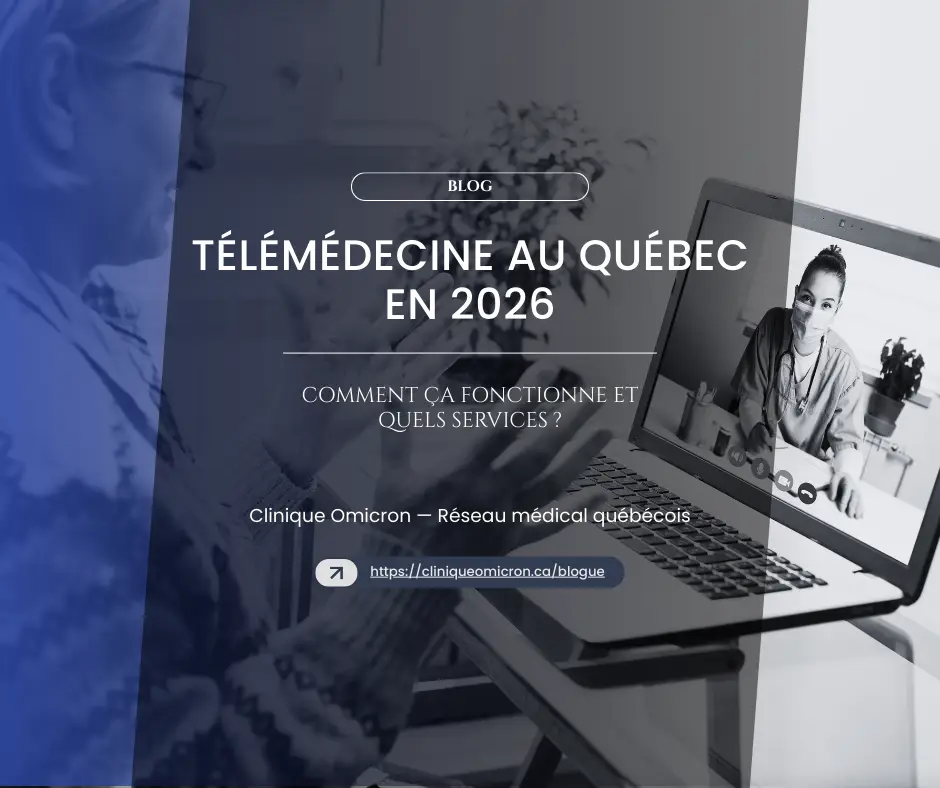
A telemedicine medical consultation follows essentially the same process as an in-person consultation, adapted to the digital format. After booking an appointment on a secure platform—via computer, tablet, or smartphone—the patient fills out a preliminary questionnaire about their symptoms, medical history, and current medications. At the time of the appointment, the consultation takes place via videoconference: the doctor conducts the clinical interview, asks questions, asks the patient to describe their symptoms or show a visible body area if relevant, and makes their assessment.
Following the consultation, the doctor can directly send an electronic prescription to your chosen pharmacy, write a medical note or a sick note, order laboratory tests or imaging exams, refer you to a specialist with a referral letter, or simply reassure and advise when no medical intervention is necessary. A consultation report is usually available in your digital patient file.
What health problems can be treated with telemedicine?
The scope of telemedicine is broader than it might seem. Many common conditions can be effectively assessed and treated remotely. Bacterial infections such as urinary tract infections, strep throat, bacterial sinusitis, superficial skin infections, and ear infections are well-suited for telemedicine when symptoms are clearly described. Dermatological issues like eczema, acne, psoriasis, or allergic skin reactions can be evaluated using photos transmitted through the platform. Stabilized chronic diseases—high blood pressure, type 2 diabetes, hypothyroidism, asthma—can be effectively monitored remotely with a review of biological results and treatment adjustments.
Prescription renewals — chronic medications with established treatment plans — are one of the most frequent and appreciated uses of telemedicine. Mental health issues such as anxiety, mild to moderate depression, insomnia, or chronic stress are particularly well-suited to the video format, where some patients even feel more comfortable than during in-person visits. Contraception, sexually transmitted infections with available test results, functional gastrointestinal issues, and post-travel check-ups also fall within the usual scope of telemedicine.
When is telemedicine not appropriate?
Telemedicine has clear limitations related to the absence of a direct physical examination. Medical emergencies — chest pain, severe shortness of breath, suspected stroke, trauma, loss of consciousness — always require calling 911 or going to the hospital emergency room. Conditions requiring a precise physical examination — thorough cardiac auscultation, complex neurological evaluation, abdominal palpation, gynecological exam — necessitate an in-person consultation. New conditions for which a doctor has no patient history may sometimes require an in-person visit for a comprehensive initial assessment.
A good telemedicine doctor knows how to recognize the limitations of the format and refer to an in-person consultation when the situation requires it. Telemedicine is not intended to replace all medical care, but to complement it and facilitate access for common needs — particularly for people without a family doctor, those living in remote areas, or those whose professional or family constraints make it difficult to travel to a clinic.
Telemedicine and the RAMQ: What is and isn't covered
In Quebec, medical consultations conducted via telemedicine are reimbursed by the RAMQ when performed by a physician participating in the public plan. Since regulatory changes introduced during the pandemic and maintained since then, medical services performed remotely are recognized and compensated as in-person services for the vast majority of service codes. This means that a telemedicine consultation with a physician participating in the RAMQ costs nothing to the covered patient.
Some private telemedicine platforms offer paid consultations that are not covered by the RAMQ. These are useful for people who want immediate availability or services not covered by the public plan. Group insurance often covers these services. Clinique Omicron offers RAMQ-covered telemedicine services in several of its Quebec branches, allowing patients without a family doctor to access a qualified physician for their everyday needs at no direct cost.
Telemedicine and Continuity of Care: Building Remote Monitoring
One of the challenges of telemedicine is avoiding "counter medicine"—one-off consultations without continuity or knowledge of the patient. Current best practices integrate telemedicine into a hybrid care model where continuity is ensured by a shared medical record and structured follow-up. At Clinique Omicron, telemedicine consultations are integrated into the patient's file and allow for longitudinal monitoring—lab results, consultation history, prescriptions, medical notes—which can be accessed by the clinic's physicians during subsequent consultations, whether virtual or in-person.
For patients with chronic illnesses, telemedicine facilitates more frequent medical contact without the logistical burden of repeated travel. Monthly or quarterly monitoring of hypertension, diabetes, or depression becomes much more accessible—and therefore more likely to be maintained—in a virtual format. Studies show that adherence to medical follow-up significantly increases when virtual options are available.
Frequently Asked Questions about Telemedicine in Quebec
Les réponses aux questions les plus fréquentes sur ce sujet.
Yes, for consultations covered by the RAMQ, a valid health insurance card is required, just like for in-person consultations. The RAMQ covers medical care for Quebec residents holding a valid card. For individuals whose cards have expired or are awaiting renewal, some consultations can be provided on a private, paid basis until their situation is regularized. Tourists and foreign visitors are not covered by the RAMQ and must use their travel insurance or pay directly.
Quebec regulations authorize electronic medical prescriptions, including for the vast majority of common medications. On the other hand, certain controlled substances — notably opioids and benzodiazepines — are subject to specific restrictions for remote prescribing due to the risks of misuse. A physician can renew a treatment with a controlled substance that has already been established and well-documented for a known patient, but initiating a new treatment with a controlled substance will generally require an in-person consultation to allow for a complete physical assessment and identity verification.
Several telemedicine platforms offer an audio phone consultation alternative when video connections are not possible or stable enough. Although video is preferable because it allows the doctor to observe certain visual signs, a phone consultation remains medically valid for many needs—prescription renewals, follow-up on results, questions about treatment, verbally well-described symptoms. The RAMQ recognizes and reimburses medical phone consultations to the same extent as video consultations.
Yes. One of the main advantages of telemedicine is precisely the absence of geographical constraints. Whether you are on the South Shore of Montreal, in Abitibi, Gaspésie, or Saguenay, you can consult a Clinique Omicron doctor from your home, your office, or any location with an internet or phone connection. This accessibility is particularly valuable for Quebecers in remote regions where the doctor shortage is even more pronounced than in urban areas. Appointments are made online, and access times are generally much shorter than in a physical clinic for non-emergency consultations.
Teleconsultation in Quebec — Private Online Doctor | Omicron Clinic
Omicron Clinic
Need to consult a doctor?
In-person or via telemedicine, anywhere in Quebec.
We accept insurance. Telemedicine consultations available 7 days a week. No family doctor required.