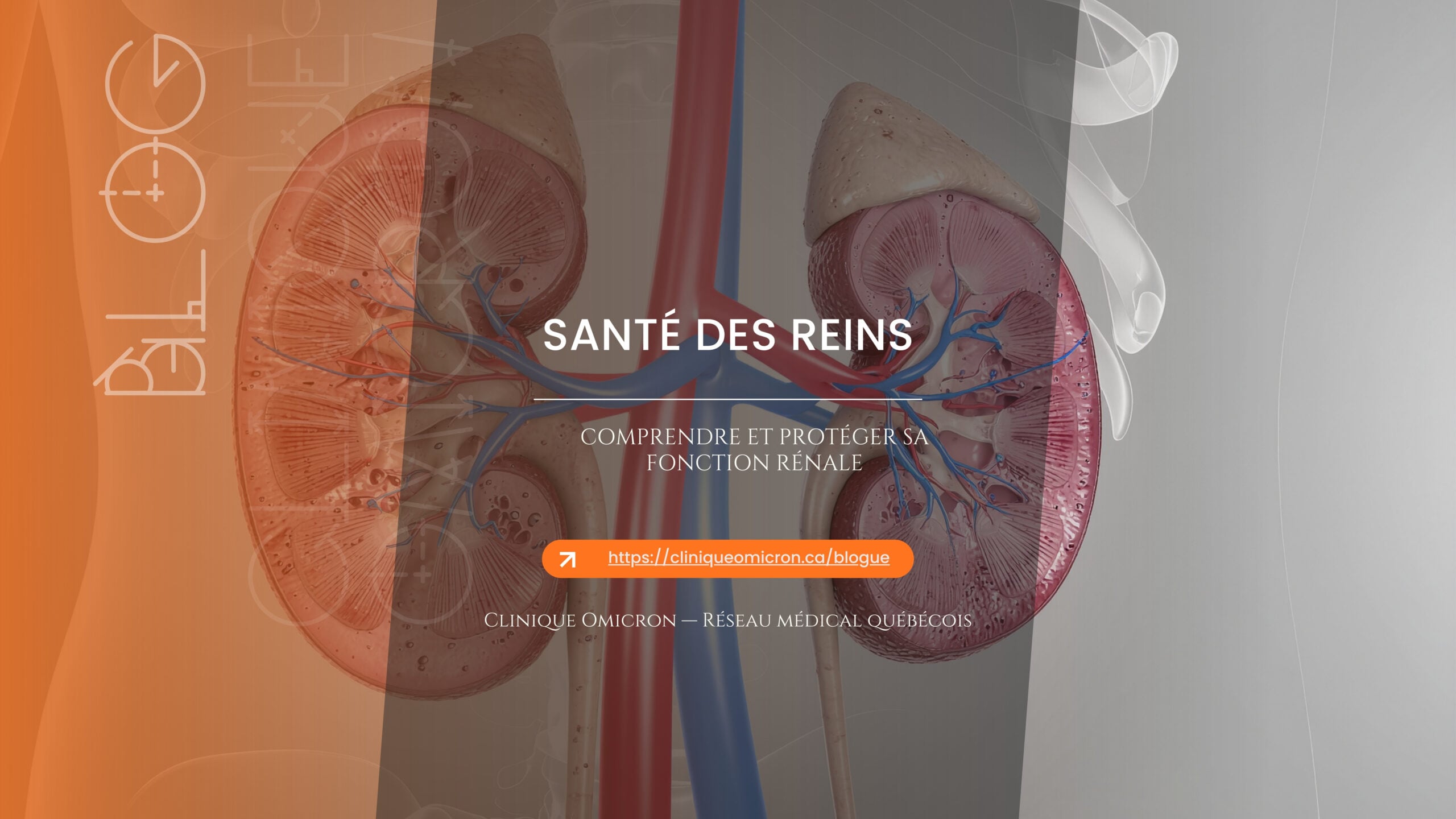

We rarely think about it, yet our kidneys filter our blood day and night, silently. Taking care of the kidney health, ...means protecting two organs that eliminate waste and regulate blood pressure and the body’s water balance. The problem: chronic kidney disease can progress for years without any symptoms, right up to an advanced stage. The good news is that it can be detected early with simple tests, and you can adopt habits that are gentle on your kidneys. This guide covers what the kidneys do, who should have them checked, and what protects them on a daily basis.
On this page
- The Role of the Kidneys in the Body
- Chronic kidney disease, which often has no symptoms
- Risk Factors You Should Be Aware Of
- How Is Kidney Function Assessed?
- Habits That Protect the Kidneys
- Anti-Inflammatory Drugs and the Kidneys: Caution Is Advised
- Who Should Have Their Kidneys Checked
- Myths and misconceptions
- Frequently asked questions
The Role of the Kidneys in the Body
Visit reins are two fist-sized organs located on either side of the spine in the lower back. They continuously filter the blood to remove waste products and excess water, which are then converted into urine. But their role goes far beyond simply filtering.
What the Kidneys Do Every Day
- Eliminate metabolic waste and excess substances.
- Regulate the body's water and salt levels.
- Help control blood pressure.
- Maintain the balance of minerals such as potassium and calcium.
- Helps support red blood cell production and bone health.
When the kidneys are functioning properly, all this work happens without us even noticing. When their function declines, waste products and water gradually build up, which can affect the entire body.
Chronic kidney disease, which often has no symptoms
Visit chronic kidney disease refers to a gradual and persistent decline in the kidneys’ ability to filter. What makes it particularly confusing is that it progresses for a long time without pain or obvious symptoms. The kidneys have a large functional reserve and compensate as long as they can, so the first symptoms often do not appear until the disease has reached an advanced stage.
Why She Goes Unnoticed
- The kidneys compensate for some of the loss of function for a long time.
- There is usually no pain or discomfort at first.
- Late symptoms (fatigue, swelling, poor sleep) are nonspecific.
- Often, only a blood or urine test can detect the decline at a stage when intervention is still possible.
Late, nonspecific signs
At a more advanced stage, some people notice persistent fatigue, swollen ankles, changes in their urine, or blood pressure that is difficult to control. These symptoms are not specific to the kidneys and can have many other causes. This is precisely why screening—before symptoms appear—is so important for people at risk. Only a healthcare professional can make that connection.
To remember
- The kidneys filter the blood and regulate water, salt, and blood pressure.
- Chronic kidney disease often progresses without symptoms at first.
- The kidneys compensate for the loss of function for a long time.
- Late-stage symptoms are nonspecific and not unique to the kidneys.
- A simple blood or urine test can detect it early.
- Interpretation should always be left to a healthcare professional.
Risk Factors You Should Be Aware Of
Certain conditions increase the risk of kidney damage. Knowing these factors helps determine whether regular monitoring is recommended—a decision that should be made in consultation with a healthcare professional.
| Risk factor | Why It's Important for the Kidneys |
|---|---|
| Diabetes | The most common cause of kidney damage; high blood sugar damages the small blood vessels that filter |
| Hypertension | Puts a strain on the blood vessels in the kidneys and weakens them over time |
| Older age | Kidney function naturally tends to decline with age |
| Family history | A family history of kidney disease increases the risk |
| Cardiovascular diseases | The heart and kidneys share blood vessels and risk factors |
| Frequent Use of Certain Medications | Some anti-inflammatory drugs put more strain on the kidneys |
A Burden That Weighs Heavily
These factors often occur together: a person living with both diabetes and high blood pressure is at higher risk than someone with only one of these conditions. Diabetes and high blood pressure alone account for a large proportion of cases of chronic kidney disease (Canadian Kidney Foundation). Keeping these conditions well managed is one of the best ways to protect your kidneys.
To remember
- Diabetes is the most common cause of kidney damage.
- Over time, high blood pressure weakens the blood vessels in the kidneys.
- Risk factors accumulate and have a greater impact when combined.
- A family history of the condition increases an individual's risk.
- Controlling diabetes and high blood pressure also protects the kidneys.
- Risk assessment is conducted with a healthcare professional.
Do you have diabetes, high blood pressure, or a family history of these conditions, and have you never had your kidneys checked? Make an appointment on our appointment page, talk to a professional right away by teleconsultation without leaving your home, or learn more about our business services.
How Is Kidney Function Assessed?
Evaluate the kidney function It doesn't require any complicated tests. Two basic tests—one on blood and one on urine—are enough to provide a useful picture. They are often included in a routine checkup.
Creatinine and estimated GFR (in the blood)
Creatinine is a waste product from the muscles that the kidneys eliminate. Its level in the blood serves as an indirect measure of filtration capacity. Based on this value, along with gender and age, the laboratory calculates an estimated glomerular filtration rate (eGFR). To understand in detail what these numbers mean, see our article on Creatinine, GFR, and Kidney Function.
Urinalysis and Albuminuria
A urine test can reveal abnormal levels of protein, particularly albumin. This «albuminuria» is an early sign of kidney damage, sometimes even before the GFR begins to decline. To learn what this common test looks for, see our guide on urinalysis.
| Test | What it offers |
|---|---|
| Serum Creatinine | Indirect measure of filtration capacity |
| Estimated DFG | A more accurate assessment of kidney function, taking age and sex into account |
| Albumin in the urine | An early sign of disease, sometimes even before a drop in GFR |
| Blood pressure | A key factor related to kidney health, measured concurrently |
These two measures are often used together: estimated GFR and albuminuria provide a more comprehensive picture when considered together than either one alone. An isolated result should be interpreted with caution and, if necessary, confirmed by a follow-up test.
Habits That Protect the Kidneys
No magic formula, but some common-sense habits that support kidney health—often the same ones that protect the heart. They are not a substitute for medical care, but they do contribute to it.
In everyday life
- Drink enough water to meet your needs, without forcing yourself to drink too much.
- Maintain a blood pressure within the range agreed upon with your doctor.
- Effectively managing high blood sugar if you have diabetes.
- Limit salt intake and promote a varied diet rich in plant-based foods.
- Stay physically active to the best of your ability.
- Avoid tobacco, which damages blood vessels, including those in the kidneys.
Excesses to Avoid
- The repeated use of anti-inflammatory medications without consulting a healthcare professional.
- Excessive alcohol consumption.
- Self-medication or taking high doses of supplements without medical supervision.
These measures alone do not guarantee anything, but they reduce the strain on the kidneys and address the main risk factors. Any decision regarding treatment or supplements should be made in consultation with a healthcare professional.
Anti-Inflammatory Drugs and the Kidneys: Caution Is Advised
One point deserves special attention: the anti-inflammatory drugs Over-the-counter pain relievers can put a strain on the kidneys, especially with repeated use or at high doses.
- Occasional and short-term use is generally tolerated in healthy individuals.
- Prolonged or repeated use requires consultation with a professional.
- The risk is greater in cases of dehydration, advanced age, or pre-existing kidney problems.
- Never exceed the recommended doses, and ask your pharmacist for advice if needed.
This doesn't mean you should avoid them altogether, but rather that you should use them with caution, especially if you have risk factors for kidney problems. If you're unsure, a pharmacist or doctor can recommend a solution tailored to your situation.
Who Should Have Their Kidneys Checked
Because chronic kidney disease has no symptoms, the screening is primarily intended for people at risk, even if they have no symptoms. The frequency of monitoring is always determined in consultation with a healthcare professional.
People who often benefit from follow-up care
- People living with diabetes.
- People with high blood pressure.
- Those with a family history of kidney disease.
- Older adults, whose kidney function naturally declines.
- Women who regularly take certain medications that are excreted by the kidneys.
When detected early, a decline in function can often be closely monitored and managed to slow its progression. That is precisely the benefit of a simple screening for those at risk: taking action before symptoms appear.
Myths and misconceptions
If my back doesn't hurt, my lower back is fine
False. Chronic kidney disease usually does not cause pain and is asymptomatic in the early stages. Lower back pain is most often caused by the muscles or the spine, not the kidneys. Only a test can check kidney function.
Drinking plenty of water «cleanses» and heals the kidneys
Nuanced. Adequate hydration supports kidney function, but drinking more than you need will not repair them or reverse an existing condition. Forced overhydration provides no additional benefit.
Protein inevitably damages the kidneys
Nuanced. For people with healthy kidneys, a balanced diet that includes protein is not a problem. In cases of kidney disease, protein intake may need to be adjusted, but only under the guidance of a healthcare professional.
Kidney disease is always irreversible and serious
Nuanced. If detected early, a decline in function can often be slowed and closely monitored. The course of the condition depends on the cause and the treatment plan, which are determined in consultation with a healthcare professional.
Only older adults are affected
False. The risk increases with age, but diabetes, high blood pressure, or a family history of the condition can affect the kidneys much earlier. Screening depends on risk factors, not just age.
Frequently asked questions
How can I tell if my kidneys are working properly?
Renal function is primarily assessed by measuring creatinine levels and estimating glomerular filtration rate (GFR) in the blood, as well as by testing for albumin in the urine. These tests are often included in a panel of tests. Only a healthcare professional can interpret them.
Does chronic kidney disease cause symptoms?
In the early stages, it is usually asymptomatic. Symptoms such as fatigue, swelling, or changes in urine typically appear at a more advanced stage and are not specific to kidney disease. This is why screening is important for people at risk.
Are anti-inflammatory drugs dangerous for the kidneys?
Occasional, short-term use is generally safe for healthy individuals. Repeated use or high doses can put a strain on the kidneys, especially if risk factors are present. If in doubt, consult a pharmacist or doctor.
How much water should you drink to protect your kidneys?
There is no single figure: needs vary depending on the person, the activity, and the weather. Drinking when you’re thirsty and staying well-hydrated is usually enough. Drinking more than you need does not provide any benefit for healthy kidneys.
Who should have their kidney function checked?
People living with diabetes, high blood pressure, a family history of kidney disease, older adults, or those taking certain medications often benefit from regular follow-up care. The frequency of these visits should be determined in consultation with a healthcare professional.
Where can I get my kidney function checked in Quebec?
Testing and appointments are available at our network of service locations in Quebec. You can schedule your visit through our appointment page or explore the entire our services.
Sources
- Canadian Kidney Foundation — rein.ca
- National Institute for Excellence in Health and Social Services (INESSS) — inesss.qc.ca
- Hypertension Canada — hypertension.ca
- Diabetes Quebec — diabete.qc.ca
- Quebec Ministry of Health and Social Services (MSSS) — msss.gouv.qc.ca
- Québec.ca Portal — Chronic Kidney Disease — quebec.ca
Medical consultation | Clinique Omicron
Omicron Clinic
Need to consult a doctor?
In-person or via telemedicine, anywhere in Quebec.
We accept insurance. Telemedicine consultations available 7 days a week. No family doctor required.