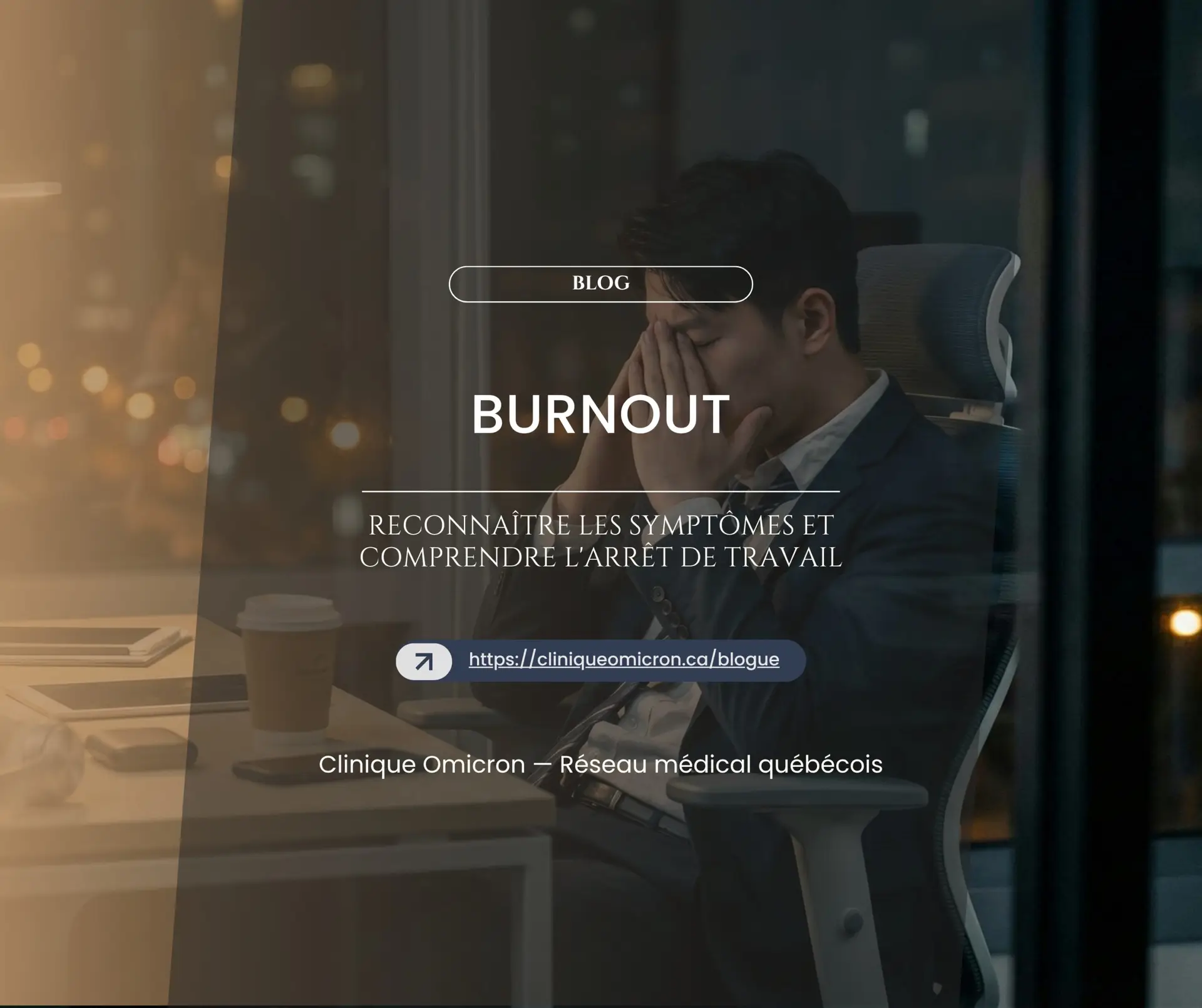

L’épuisement professionnel — terme clinique — est reconnu par l’Organisation mondiale de la santé (OMS) dans la Classification internationale des maladies (CIM-11) comme un phénomène lié au travail, classifié sous le code Z73.0 dans la CIM-10 (problèmes liés à la difficulté à gérer sa vie). Il est défini par trois dimensions centrales :
– Un sentiment d’épuisement ou d’énergie fortement diminuée
– A growing mental detachment from work, or feelings of negativism or cynicism related to work
– Reduced professional efficiency
Le burnout résulte d’une exposition prolongée à des facteurs de stress au travail qui n’ont pas été suffisamment gérés. Il se distingue de la simple fatigue par sa profondeur, sa durée, et son impact sur toutes les sphères de la vie — pas seulement la sphère professionnelle.
Il est important de noter que le burnout n’est pas, à lui seul, un diagnostic médical au sens traditionnel. C’est un état clinique qui peut s’accompagner ou évoluer vers un trouble d’adaptation, un trouble anxieux généralisé ou un épisode dépressif majeur — lesquels, eux, ont un code diagnostique officiel et peuvent justifier un arrêt de travail.
Causes and risk factors
Le burnout ne résulte pas d’une cause unique. Il émerge d’un déséquilibre prolongé entre les exigences du travail et les ressources disponibles pour y répondre.
The most documented risk factors include:
Work-related
– Chronic workload (task volume, unrealistic deadlines)
- Lack of control over one's work or decisions
- Lack of recognition (monetary, verbal, social)
Ambiguity of roles or conflict of values
– Difficult interpersonal relationships with management or colleagues
– Travail émotionnellement exigeant (soins, relation d’aide, service à la clientèle)Related to the person
– Tendency towards high perfectionism
Difficulty establishing boundaries
– Weak social support network
– Période de vie particulièrement chargée (aidant naturel, parent d’enfants en bas âge, etc.)
Certains secteurs d’activité présentent des taux d’épuisement professionnel plus élevés : soins de santé, enseignement, services d’urgence, technologies de l’information. La pandémie de COVID-19 a accentué ce phénomène dans de nombreux milieux de travail au Québec.
How does burnout manifest?
Le burnout s’installe rarement du jour au lendemain. Il progresse souvent par étapes, avec des signes qui s’intensifient progressivement.
Physical symptoms
– Intense and persistent fatigue that does not disappear with rest
- Sleep disorders (insomnia, unrefreshing sleep)
– Frequent headaches, muscle tension
– Diffuse pain, digestive problems
– Frequent infections (weakened immune system)
Psychological and emotional symptoms
– Sentiment d’être vidé, à bout, sans ressources
– Irritabilité, impatience, sautes d’humeur
– Sentiment de dévalorisation ou d’incompétence
Loss of meaning or satisfaction at work
Emotional detachment, cynicism, indifference
Behavioral and cognitive symptoms
– Difficulty concentrating, memory gaps
Procrastination, avoidance of responsibilities
Social isolation, withdrawal
– Consommation accrue d’alcool, de caféine ou de substances
– Reduction or abandonment of activities that previously provided pleasure
These symptoms progressively interfere with the ability to function at work and in personal life.
Diagnosis: When to see a doctor
Il n’existe pas de test biologique pour diagnostiquer le burnout. L’évaluation est clinique : le médecin discute avec vous de vos symptômes, de votre histoire professionnelle et personnelle, et évalue l’impact sur votre fonctionnement.
Consult a doctor if you have several of the symptoms described above for several weeks, especially if:
– Votre épuisement est tel que vous n’arrivez plus à accomplir vos tâches habituelles
– Do you have intrusive negative thoughts about your work or your future?
Your loved ones notice a significant change in your behavior
– Do you have thoughts of not wanting to be here anymore, or suicidal thoughts?
If you are having thoughts of suicide, please call the Suicide Prevention Line immediately at 1-866-APPELLE (277-3553) or dial 9-1-1.
Le médecin évaluera si l’état correspond à un trouble d’adaptation, une dépression ou un autre diagnostic. Cette évaluation est indispensable pour déterminer le traitement approprié et, si nécessaire, produire les documents médicaux requis pour un arrêt de travail.
Treatment Options
La prise en charge du burnout est progressive et multidimensionnelle. Elle vise à restaurer les ressources de la personne tout en s’attaquant, lorsque possible, aux causes à l’origine de l’épuisement.
Pour les cas d’épuisement sévère, un arrêt de travail peut être médicalement nécessaire. Au Québec, l’arrêt de travail est prescrit par un médecin et peut ouvrir droit à des prestations d’assurance salaire (via l’employeur ou une assurance collective) ou à des prestations de maladie de l’assurance-emploi fédérale.
L’arrêt de travail n’est pas une fin en soi — c’est une période de rétablissement structurée. Un retour progressif au travail est généralement planifié avec l’employeur, souvent accompagné par un médecin et parfois un professionnel en réadaptation.
Psychotherapeutic interventions
La thérapie cognitive-comportementale (TCC) est l’approche la mieux documentée pour le traitement du burnout et des conditions associées (trouble d’adaptation, dépression). Elle aide à identifier et modifier les schémas de pensée et les comportements qui entretiennent l’épuisement.
D’autres approches peuvent être utiles selon la situation : thérapie d’acceptation et d’engagement (ACT), thérapie basée sur la pleine conscience (MBSR), ou soutien psychologique auprès d’un psychologue, d’un travailleur social ou d’un psychothérapeute.
In Quebec, some psychological services are partially reimbursed by group insurance plans. Public services exist, but waiting times can be long. Private services are also available.
Medication
Si le burnout s’accompagne d’un épisode dépressif majeur ou d’un trouble anxieux, un médecin peut discuter de l’utilité d’un traitement médicamenteux (antidépresseurs, anxiolytiques à court terme). La médication est évaluée au cas par cas et ne s’applique pas à tous les cas d’épuisement professionnel.
Lifestyle modifications
Les stratégies d’hygiène de vie jouent un rôle de soutien important : sommeil régulier, activité physique douce adaptée à l’énergie disponible, alimentation équilibrée, et réduction progressive des facteurs de stress identifiables.
Accès à un médecin pour l’évaluation d’un burnout
Si vous pensez souffrir d’épuisement professionnel, la première étape est d’en parler à un médecin. Clinique Omicron offre des consultations médicales pour les troubles de santé mentale liés au travail — que ce soit pour une première évaluation, un suivi, ou la gestion d’un arrêt de travail — à travers ses points de service au Québec et en téléconsultation.
Teleconsultation is often well-suited for those experiencing severe burnout and whose mobility is reduced. A doctor can assess you, discuss options, and refer you to relevant specialized resources.
UVO Soins à domicile peut également intervenir à domicile pour les patients dont l’état rend les déplacements difficiles.
FAQ - Burnout and Professional Exhaustion in Quebec
Is burnout recognized as an illness in Quebec?
Le burnout n’est pas un diagnostic médical officiel au sens du DSM-5, mais il peut s’accompagner de conditions diagnosticables (dépression, trouble d’adaptation) qui, elles, ouvrent droit à des prestations. Un médecin évalue la situation clinique de façon globale.
A doctor can issue a medical certificate for a work stoppage due to burnout.
Tout médecin habilité — médecin de famille, médecin en clinique, psychiatre — peut délivrer un certificat médical justifiant un arrêt de travail si l’état de santé le justifie.
What benefits can one receive during a work stoppage?
Selon votre situation : prestations d’assurance salaire via votre assurance collective, prestations de maladie de l’assurance-emploi (fédéral, jusqu’à 15 semaines), ou indemnités CNESST si la condition est liée à un accident de travail ou à une maladie professionnelle reconnue. Un médecin et votre employeur vous guident dans les démarches.
How long does a sick leave for burnout last?
La durée varie selon la sévérité de l’état et la nature du travail. Elle est déterminée médicalement et réévaluée régulièrement. Un retour progressif est généralement planifié.
Can you be laid off during a work stoppage due to illness?
Au Québec, la Loi sur les normes du travail prévoit des protections pour les salariés en arrêt de travail pour maladie. Consultez la Commission des normes, de l’équité, de la santé et de la sécurité du travail (CNESST) pour connaître vos droits spécifiques.
How to differentiate between burnout and depression?
Les deux conditions partagent des symptômes, mais la dépression peut avoir des causes multiples non liées au travail et s’accompagne souvent d’une tristesse profonde et persistante. Un médecin ou un psychologue peut vous aider à distinguer les deux et à orienter le traitement.
Can we have a remote consultation to discuss burnout?
Yes. A doctor can assess you via telehealth, discuss your situation, and direct you to appropriate resources—including if a medical leave seems indicated.
Can burnout return after going back to work?
Oui, si les facteurs de risque à l’origine de l’épuisement n’ont pas été adressés. Un retour progressif, un soutien thérapeutique et des aménagements du poste de travail réduisent ce risque.
Teleconsultation in Quebec — Private Online Doctor | Omicron Clinic
Omicron Clinic
Need to consult a doctor?
En clinique ou en télémédecine, partout au Québec.
Reçus pour assurances. Téléconsultation 7 j/7. Sans médecin de famille requis.