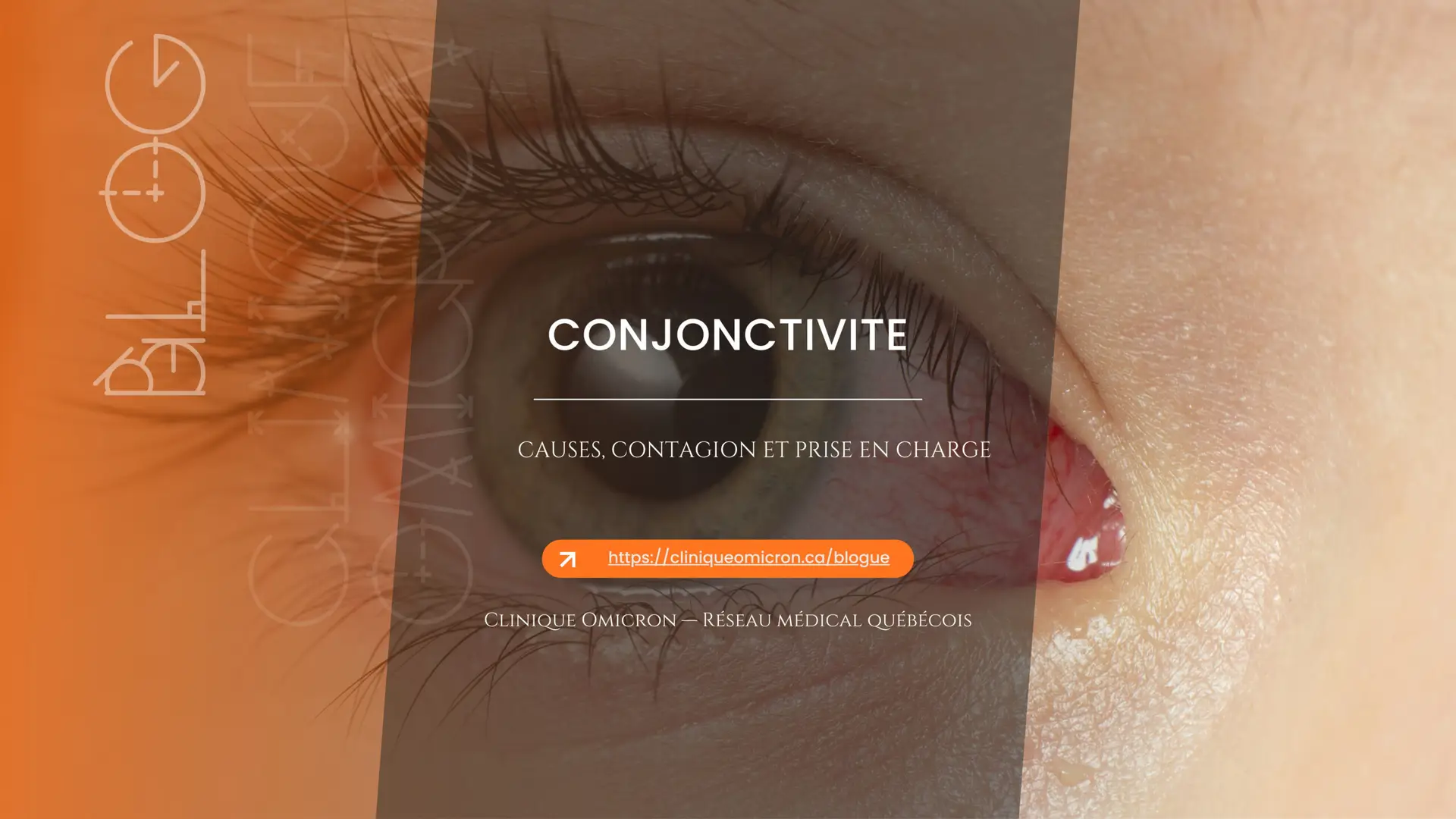

A red, watery eye that's stuck shut when you wake up: the conjunctivitis is one of the most common reasons for seeking medical care, in both children and adults. This inflammation of the thin membrane covering the white of the eye and the inside of the eyelids can have several possible causes—viral, bacterial, or allergic—which do not always require the same course of action. Distinguishing between these types, understanding the risks of spread in daycare and school, and recognizing warning signs will help you respond appropriately. This article provides a clear overview without making a diagnosis for you.
On this page
- What Is Conjunctivitis?
- The three main types
- Recognizing the Distinctive Symptoms
- Contagion, Daycare, and Returning Home
- The Hygiene Measures That Matter
- Self-Care and Ways to Find Relief
- When to Seek Medical Attention and Warning Signs
- Teleconsultation with a photo
- Myths and misconceptions
- Frequently asked questions
- Sources
What Is Conjunctivitis?
Visit conjunctivitis is an inflammation of the conjunctiva, the transparent membrane that lines the white part of the eye and the inner surface of the eyelids. When it becomes irritated or infected, its small blood vessels dilate, giving the eye its characteristic red or pink appearance, often accompanied by watery eyes, discharge, and a sensation of having sand in the eye.
Symptoms common to all forms
- Redness of the white part of the eye, in one or both eyes.
- A sensation of irritation, burning, or a foreign body.
- Watery eyes and secretions of varying amounts.
- Sometimes my eyelids are stuck together when I wake up.
- Moderate sensitivity to light in some cases.
What varies depending on the cause
The color and texture of the discharge, the presence of itching, whether one or both eyes are affected, and associated symptoms such as a cold or allergies provide clues as to the likely cause. These clues help a healthcare professional pinpoint the cause, but they do not always allow for a definitive diagnosis remotely.
The three main types
Most cases of conjunctivitis are grouped into three main categories based on their cause: viral, bacterial and allergic. A fourth type, known as irritant conjunctivitis, results from contact with a substance such as smoke, chlorine from a swimming pool, or a chemical.
Viral conjunctivitis
- The most common cause, often linked to the same viruses that cause the common cold.
- Fairly clear, watery discharge; excessive tearing.
- It often starts in one eye and can then spread to the other.
- Often accompanied by a cold or a sore throat.
- Highly contagious; it usually clears up on its own within a few days to two weeks.
Bacterial conjunctivitis
- Thicker, yellowish, or greenish discharge.
- Eyelids are often stuck together upon waking, sometimes on both eyes.
- Contagious, particularly through direct contact and shared objects.
- A healthcare professional determines whether treatment is appropriate.
Allergic conjunctivitis
- It almost always affects both eyes at the same time.
- Intense itching, clear watery eyes, swollen eyelids.
- Often caused by pollen, dust mites, or pets.
- Often accompanied by sneezing and a runny nose.
- Not contagious.
To remember
- Conjunctivitis is an inflammation of the membrane that covers the eye.
- The three main types are viral, bacterial, and allergic.
- The viral and bacterial forms are contagious; the allergic form is not.
- Clear secretions are more likely to indicate a viral or allergic infection, while thick secretions are more likely to indicate a bacterial infection.
- Itching in both eyes suggests an allergic cause.
- Only a healthcare professional can confirm the cause and advise on the appropriate course of action.
Recognizing the Distinctive Symptoms
Distinguishing between different types of conjunctivitis with the naked eye is never completely reliable, but a few landmarks help provide guidance. The following table summarizes the general trends, keeping in mind that presentations may overlap and that a single patient may exhibit features of several forms.
| Landmark | Viral | Bacterial | Allergic |
|---|---|---|---|
| Secretions | Clear, liquid | Thick, yellow, or green | Clear eyes, watery eyes |
| Itching | Light | Light | Intense |
| Affected eyes | One, and then often the other | One or both | Almost always both |
| Context | Cold, recent contact | Contacts, Shared Items | Pollen, animals, dust |
| Contagion | Raised | Present | None |
The Limitations of Self-Assessment
These guidelines are meant to help describe the situation more clearly, not to help you diagnose the problem yourself. A red eye can also be a sign of a problem unrelated to conjunctivitis—one that may sometimes be more serious. If in doubt, it’s best to have a healthcare professional evaluate the situation rather than trying to guess.
Contagion, Daycare, and Returning Home
Visit contagion is a major concern for families, especially when conjunctivitis is going around at daycare or school. Both the viral and bacterial forms are easily spread, which explains why outbreaks occur in settings where young children share spaces and objects.
How Conjunctivitis Is Spread
- Through direct contact with eye secretions from an infected person.
- By touching your eyes with your hands after touching a contaminated surface.
- By sharing towels, pillows, toys, or eye makeup.
- Through respiratory droplets in the case of viral forms.
The Question of Returning to Daycare or School
The rules for exclusion and return to school or daycare vary depending on the type of conjunctivitis and the specific setting. Some daycares or schools have their own policies and may require an evaluation. Rather than relying on general guidelines, check the current recommendations with the Info-Santé 811 hotline and the daycare or school. An allergic, non-contagious form of conjunctivitis usually does not require a child to be kept home, but this should be confirmed with a healthcare professional.
Are you concerned about a red eye in yourself or your child? You can start the process by online consultation, with supporting photos, set up a meeting at one of our service locations in Quebec when an on-site inspection is preferable, or learn more about our solutions for companies occupational health.
The Hygiene Measures That Matter
When faced with contagious conjunctivitis, the’hygiene is the best way to limit the spread of illness, both at home and in childcare settings. Simple actions, performed consistently, make a real difference.
Basic Moves
- Wash your hands often, especially after touching your eyes or a child's eyes.
- Avoid rubbing or touching your eyes.
- Gently wipe away secretions with a clean compress, moving from the inner corner to the outer corner.
- Use a new compress for each eye and each cleaning.
- Do not share towels, pillowcases, eye drops, or makeup.
At Home and in Childcare Settings
- Wash the affected person's towels and bedding in hot water.
- Clean frequently touched surfaces and objects.
- Give each person their own clearly labeled towel.
- Throw away the eye makeup used during the episode.
These measures also help prevent the spread of other common germs in childcare settings. Strict hand hygiene and the cleaning of shared items remain, in all cases, the first line of defense.
Self-Care and Ways to Find Relief
Many cases of conjunctivitis, especially the viral forms, clear up on their own over time. A few self-care help you cope better with your symptoms in the meantime, though they are not a substitute for professional advice if the situation calls for it.
To relieve discomfort
- Apply a cool, clean compress to your closed eyes to soothe the irritation.
- Gently clean away secretions with lukewarm water and a disposable compress.
- Remove your contact lenses and wear glasses instead during this time.
- Limit screen time if the light makes you feel uncomfortable.
What's Best to Avoid
Avoid reusing old eye drops, sharing a product with someone else, or applying a home remedy to your eye. If you’re unsure about which product to use or how your symptoms are progressing, your pharmacist and Info-Santé 811 are good resources, and a healthcare professional can provide guidance if necessary.
When to Seek Medical Attention and Warning Signs
Knowledge When to Seek Medical Attention This helps avoid both unnecessary worry and delays in addressing a more serious condition. Some cases go beyond simple conjunctivitis and require prompt evaluation.
Signs That Should Prompt You to Seek Medical Advice
- Intense pain in the eye, more than just irritation.
- Blurred, impaired, or diminished vision that does not improve after blinking.
- A marked sensitivity to light.
- Wearing contact lenses with a red, painful eye.
- A rash on a newborn or very young infant.
- Symptoms that get worse or do not improve after a few days.
Why These Situations Are Different
Severe pain, blurred vision, or intense sensitivity to light may indicate a more serious eye condition. For contact lens wearers, a red and painful eye should always be taken seriously. In newborns, conjunctivitis requires immediate medical evaluation. If any of these signs are present, seek medical attention promptly rather than waiting.
Teleconsultation with a photo
Since the eye is visible, a teleconsultation A photo can serve as an initial screening tool for red eye, especially when it’s difficult to travel with a child. The healthcare professional combines the image, your answers, and the context to determine the next steps.
What a remote consultation offers
- Describe the appearance of the eye and any secretions based on a clear photo.
- Provide some background: a cold, allergies, recent exposure, or contact lens use.
- Get personalized advice on hygiene and relief.
- To determine whether an in-person examination or urgent care is necessary.
Telemedicine has its limitations: a photo doesn’t tell the whole story, and a physical exam is sometimes still necessary—especially in cases of pain or vision loss. Nevertheless, it serves as a convenient starting point for an initial assessment, before referring the patient for an in-person exam if needed.
Myths and misconceptions
«Conjunctivitis always requires antibiotics.»
False. The most common form is viral and does not respond to antibiotics; it often resolves on its own. The decision to treat should be made by a healthcare professional, based on the suspected cause and the specific circumstances.
«A red eye must be conjunctivitis.»
False. Redness in the eye can have many other causes, some of which may be more serious. Severe pain, blurred vision, or extreme sensitivity to light are symptoms that require medical attention, as they go beyond the scope of ordinary conjunctivitis.
«You can keep your contact lenses in while you have conjunctivitis.»
False. It is best to remove contact lenses and wear glasses during this episode. A red, painful eye in a contact lens wearer is a condition that warrants prompt evaluation.
«Allergic conjunctivitis is contagious.»
False. The allergic form is not contagious. It results from a reaction to an allergen such as pollen or dust mites, and almost always affects both eyes at the same time.
«You must always pick up your child from daycare.»
Nuanced. Return-to-care guidelines vary depending on the type of conjunctivitis and the setting. An allergic form of conjunctivitis does not usually warrant exclusion. For other types, check with Info-Santé 811 and the child care facility rather than following a one-size-fits-all rule.
Frequently asked questions
How can I tell if my conjunctivitis is viral, bacterial, or allergic?
Certain clues can help: clear discharge and a runny nose suggest a viral infection; thick discharge suggests a bacterial infection; and itchy eyes caused by pollen or animals suggest an allergic reaction. These clues are not 100 percent reliable. Only a healthcare professional can confirm the cause and recommend the appropriate course of action.
How long is conjunctivitis contagious?
Contagiousness depends on the type of illness and persists as long as symptoms and secretions are present, sometimes longer in the case of viral forms. The allergic form is not contagious. For specific information on how long symptoms last and when your child can return to daycare, contact Info-Santé 811 and check with the school or daycare center.
Can my child go back to daycare if he or she has conjunctivitis?
It depends on the type of conjunctivitis and the daycare’s policy, which may require an evaluation. An allergic, noncontagious form of conjunctivitis does not usually warrant removal from daycare. Check the current guidelines with the daycare center and Info-Santé 811, and confirm with a healthcare professional if necessary.
What hygiene practices help limit transmission?
Wash your hands often, avoid touching your eyes, clean away secretions with a clean, single-use compress, and do not share towels, pillowcases, or makeup. Washing bedding in hot water and assigning each person their own towel also reduce the risk of spread.
When should I see a doctor for conjunctivitis?
Seek medical attention if you experience severe pain, impaired vision, extreme sensitivity to light, a red and painful eye in a contact lens wearer, redness in a newborn, or symptoms that worsen or persist. These situations go beyond ordinary conjunctivitis and require prompt evaluation.
Can a telemedicine consultation with a photo help with a red eye?
Yes, often as an initial screening. The healthcare professional combines a clear photo of the eye, your answers, and the context to provide advice and determine whether an in-person exam or urgent care is necessary. However, if you are experiencing pain or a loss of vision, a physical exam is still necessary.
Sources
- Canadian Society of Ophthalmology — Eye Health
- Quebec Association of Optometrists — Eye Health
- Government of Quebec — Info-Santé 811
- Canadian Paediatric Society — Caring for Our Children
- Government of Quebec — Health Issues from A to Z
- Quebec National Institute of Public Health (INSPQ)
Medical consultation | Clinique Omicron
Omicron Clinic
Need to consult a doctor?
In-person or via telemedicine, anywhere in Quebec.
We accept insurance. Telemedicine consultations available 7 days a week. No family doctor required.