
Services available at the clinic and at home
Wound care
The Omicron Clinic offers wound care for recent or old wounds that do not heal, swollen legs or for follow-up. Whether the wound is acute or chronic, our skills allow us to evaluate the evolution and to make a treatment plan for a faster healing and to avoid complications and hospitalizations. We offer these services with or without a prescription.
Specialized care for rapid and lasting recovery
How is your care organized?
Wound assessment
Our nurse assesses the extent, depth and nature of the wound - acute or chronic - to establish the appropriate care plan.
Customized treatment plan
Individualized care protocol based on wound type, patient condition and healing goals.
Specialized care & dressings
Application of advanced dressings, cleaning, debridement and targeted treatments according to the latest clinical practices.
Monitoring & preventing complications
Regular reassessment of progress, adjustment of care plan and patient education to prevent recurrence.
Why choose Clinique Omicron for your wound care?
Services available at the clinic and at home
Post-surgical wound
Omicron Clinic is a specialized wound care clinic for surgical patients. We offer care to promote rapid healing and prevent complications. We also offer skilled nursing care for complex or invasive surgery patients. If you need care for your post-surgical wound, please feel free to schedule an appointment with one of our nurses.
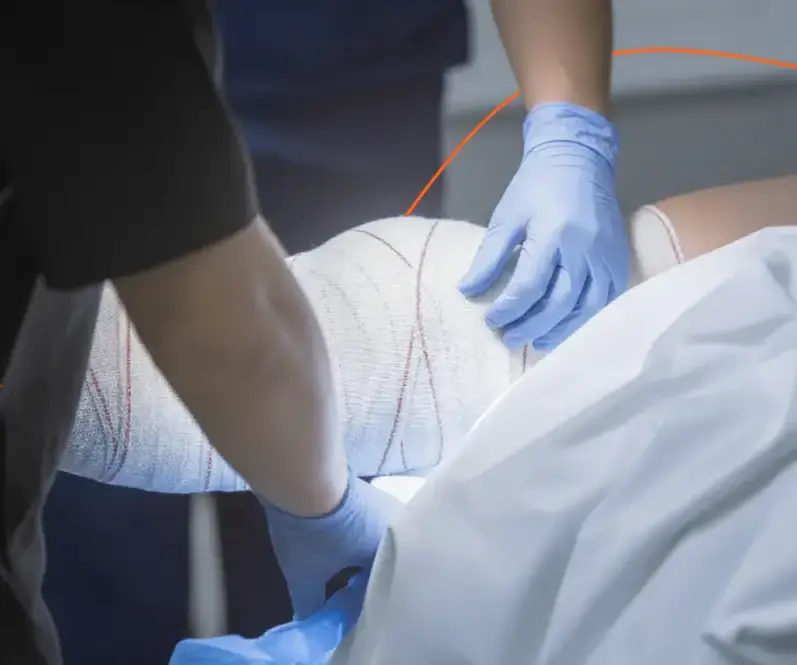
Chronic, complex and post-surgical wounds
Our specialist nurses take care of all types of wounds, from the simplest to the most complex - with or without a prescription, in the clinic or at home.
Post-surgical wound
Specialized follow-up after surgery to promote healing and prevent infectious complications.
Diabetic foot ulcer
Specialized care for diabetic wounds - difficult to heal and at high risk of severe complications.
Venous stasis dermatitis
Treatment of skin lesions caused by venous insufficiency - local care and compression to reduce inflammation.
Pressure ulcer - end of life
Expert care for palliative care patients - comfort, prevention and support for loved ones.
Arterial ulcer
Assessment and treatment of ulcers related to peripheral arterial disease - local care and coordination with the attending physician.
Acute & traumatic wounds
Immediate care for fresh wounds, lacerations, minor burns and abrasions - assessment, cleaning and specialized dressings.
Advanced wound care
Platelet-rich plasma
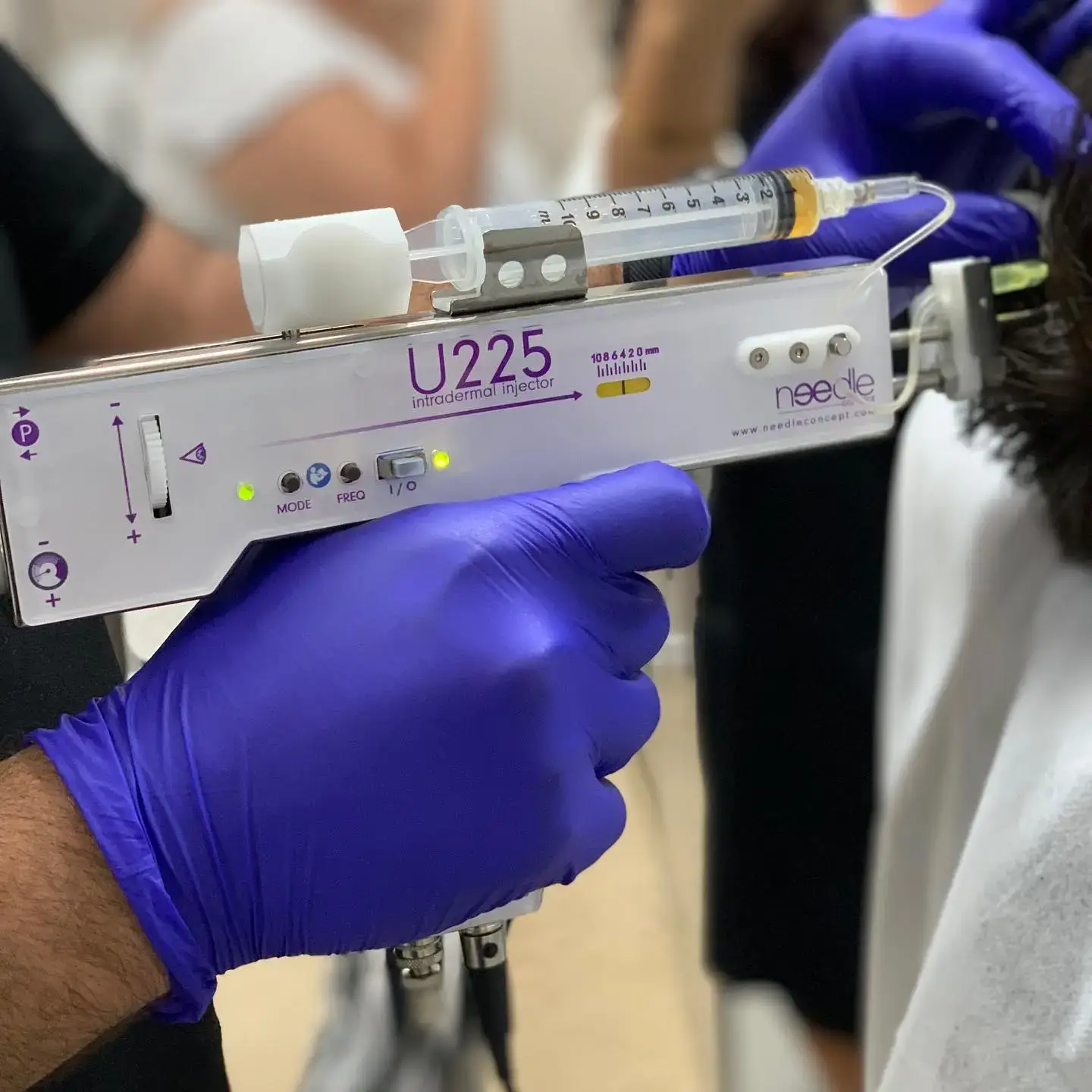
At Clinique Omicron, we offer advanced care for the management of acute and chronic wounds, including the use of Platelet Rich Plasma (PRP). This innovative method, derived from your own blood, naturally stimulates tissue regeneration thanks to a high concentration of growth factors. PRP promotes faster healing, reduces inflammation and lowers the risk of infection, particularly for post-operative wounds, diabetic ulcers and pressure sores.
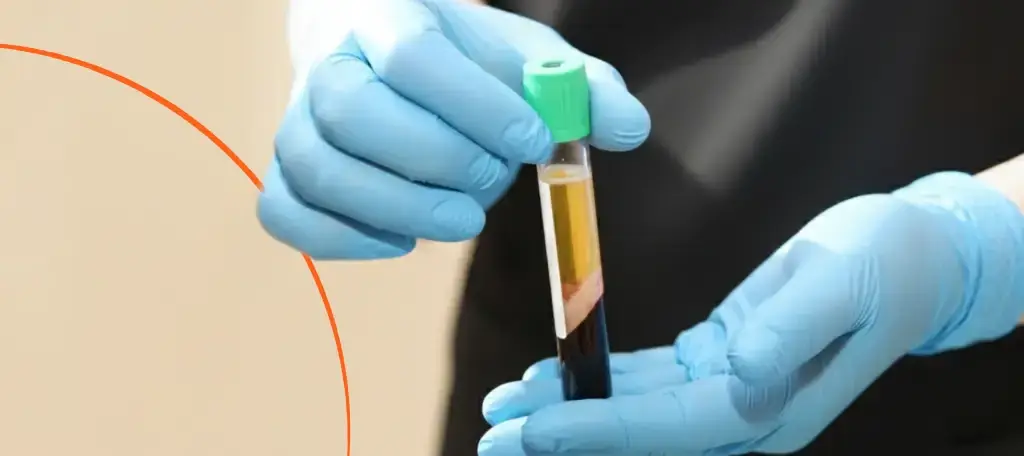
A wound that won't heal? Don't delay.
The earlier a wound is treated, the less severe the complications. Our specialized nurses take care of you quickly - without a prescription, in a clinic or at home, at one of our many points of service in Quebec.
Accessible care throughout Québec





Frequently asked questions : Wound care
Types of wounds treated, home care, PRP therapy, signs of infection, preventing complications, clear answers about our specialized wound care services at Clinique Omicron, with or without a prescription, in clinic or at home in Quebec.
No. Clinique Omicron offers its wound care services with or without a medical prescription. You can come in directly, without a prior referral or a family doctor. A prescription may be required for certain specific treatments, such as PRP therapy or some topical antibiotics, but our specialized nurses can establish a complete care plan from the first visit, with no waiting period tied to obtaining a prescription.
Our specialized nurses care for all types of wounds, from the simplest to the most complex: post-surgical wounds (scar follow-up, removal of stitches and staples), diabetic foot ulcers, venous stasis dermatitis (swollen legs, venous insufficiency), arterial ulcers, bedsores and pressure injuries (including palliative care), as well as acute and traumatic wounds (lacerations, minor burns, abrasions, bites). Chronic wounds that have not healed after several weeks are one of our specialties.
Seek care promptly if you notice any of these signs: increased or spreading redness around the wound, significant local warmth, pain that is getting worse rather than better, purulent discharge (pus) or an unusual odour, persistent or increasing swelling, fever or chills, or healing that has stalled after several weeks of care. These signs may indicate a bacterial infection requiring prompt assessment and treatment to avoid serious complications.
Care is provided in four steps. First, a complete assessment of the wound: size, depth, acute or chronic nature, tissue condition and the patient's risk factors. Next, a personalized treatment plan is established based on the type of wound and the healing goals. Then comes active care: cleansing, debridement if needed, and application of advanced dressings suited to the healing phase. Finally, regular follow-up with reassessment, adjustment of the protocol and patient education to prevent recurrence.
A wound is considered chronic when it has not healed after 4 to 6 weeks despite appropriate care. It is characterized by a lack of gradual reduction in size, persistent discharge or an unusual odour, and often by pain that stays the same or gets worse. The most common causes are diabetes, poor arterial or venous circulation, prolonged pressure on one area of the body, or an underlying infection. Chronic wounds require specialized care to avoid serious complications such as amputation.
Yes. Clinique Omicron offers home wound care for patients with reduced mobility, recovering from surgery, receiving palliative care or simply wishing to avoid travelling. Our specialized nurses come to your home, seniors' residence (RPA) or adapted living environment to carry out the necessary assessments, dressing changes and follow-ups, with the same level of quality and rigour as in the clinic. Contact us through our Contact us section to arrange home service for your area.
PRP (platelet-rich plasma) therapy involves drawing a small amount of the patient's blood, concentrating the platelets by centrifugation, and then applying this plasma directly to the wound. Platelets release growth factors that naturally speed up tissue regeneration, reduce inflammation and lower the risk of infection. It is particularly indicated for wounds that do not respond to conventional treatment: diabetic foot ulcers, deep bedsores, slow-healing post-operative wounds and other complex chronic wounds. It is an autologous treatment, derived from your own blood, with no risk of rejection.
The choice of dressing depends on the type of wound, its level of exudate (drainage), the healing phase and the condition of the exposed tissue. Our specialized nurses use advanced dressings in line with clinical best practices: hydrocolloids (low to moderately exuding wounds), alginates (heavily exuding wounds), hydrogels (dry or necrotic wounds), absorbent hydrocellular dressings, silver antimicrobial dressings (infected or at-risk wounds), and silicone dressings (fragile wounds or scars). The protocol is reassessed at each visit based on progress.
Diabetic wounds, especially foot ulcers, require special attention because high blood sugar significantly slows healing and increases the risk of deep infection that can lead to amputation. Care must be prompt: assessment of depth and of any infection, debridement of necrotic tissue if needed, dressings suited to the level of exudate, offloading of pressure from the affected area, and optimal blood sugar control in coordination with the treating physician. PRP therapy is available for diabetic ulcers that do not respond to standard treatment.
Preventing bedsores relies on a combination of measures: frequent changes of position (every 2 hours for bedridden patients), use of specialized pressure-relief mattresses and cushions, regular skin hygiene with moisturizing, monitoring of at-risk areas (heels, sacrum, shoulder blades, hips), and a suitable diet rich in protein and vitamins to support the skin. For patients receiving palliative care, our nurses provide compassionate care focused on comfort, prevention and support for caregivers at home.
RAMQ coverage for wound care in a private clinic is limited and varies depending on the clinical context. Some care provided in collaboration with a participating physician may be partially covered. However, many group and private insurance plans reimburse all or part of nursing wound care, depending on your policy. We recommend checking your coverage with your insurer before your appointment. See our Pricing section or contact us to find out the fees for the type of care required.
For your first consultation, bring if possible your relevant recent medical documents (operative report if it is a post-surgical wound, recent blood test results for diabetic patients), a complete list of your current medications, and any care supplies or dressings already used, if applicable. A prescription is not required. If you have photos showing how the wound has changed since it appeared, they may be useful for the initial assessment.