
GYNECOLOGICAL SCREENING CLINIC
PAP TEST AND HPV TEST CLINIC
Every patient receives prompt access and personalized service at Clinique Omicron. Our team of nurses and family doctors performs the Pap test (cervical cytology) and the HPV test in a confidential setting, with no medical referral required.
We offer care tailored to your situation, with several appointment slots to ensure attentive and compassionate follow-up for you, your children and the members of your family.
Pap test, HPV test or additional assessment: choosing the right test
Quebec's INESSS recommendations distinguish three complementary tests for cervical cancer screening. Our clinical team guides you to the one that matches your age, your history and your situation.
Test VPH (papillomavirus)
Direct detection of high-risk human papillomavirus, the main cause of cervical cancer. More sensitive than the Pap test for identifying people at risk.
Pap test (cytology)
Microscopic examination of cervical cells to detect precancerous or cancerous changes. Still relevant in certain contexts or as a complement to the HPV test.
Related Exams
Depending on your clinical profile, other tests may be relevant during the same visit: STBBI screening, a gynecological assessment, contraception follow-up or a consultation for symptoms.
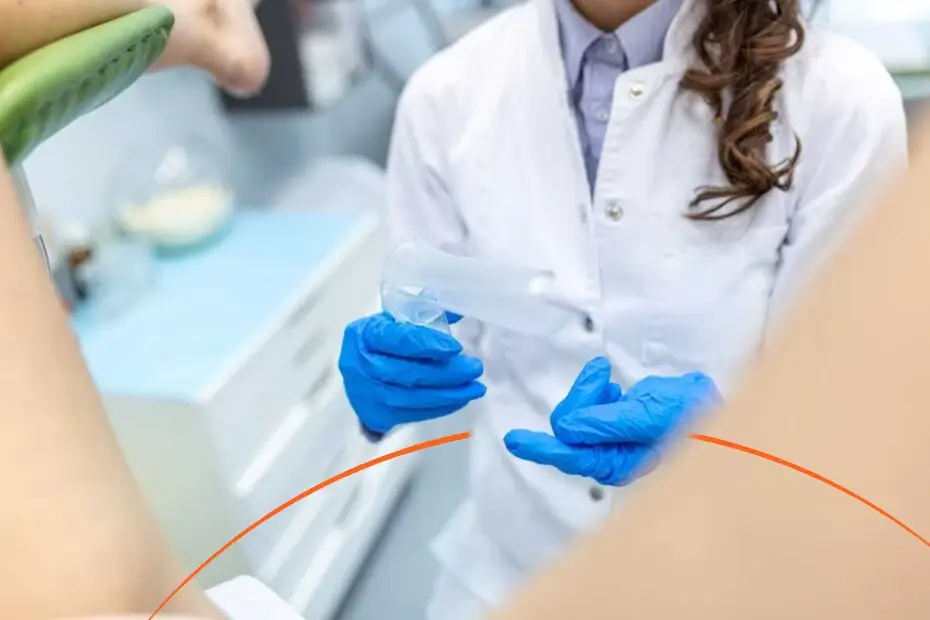
Gynecological health
HPV screening
The HPV (human papillomavirus) screening test is an essential test for preventing cervical cancer. It detects the high-risk types of HPV responsible for the majority of cervical cancers. Performed using a sample taken from the cervix, like the traditional Pap test, this screening directly targets the presence of HPV rather than abnormal cells. Regular HPV screening contributes to early detection and better prevention of cervical cancer.
Cervical cancer screening in numbers
Screening is a personal choice. To help you make an informed decision based on your values and preferences, here are the benefits and limitations of the Pap test, based on data published by the Gouvernement du Québec.
cervical cancer deaths avoided per 1,000 people aged 21 to 65 who take part in Pap test screening, compared with those who do not.
10 people out of 1,000 who do not take part in screening could die of cervical cancer.
2 people out of 1,000 who take part could die of it.
Benefits of screening
The recognized benefits for eligible people who have a Pap test at the recommended interval.
Limitations to be aware of
No screening test detects every cancer. Here are the limitations to consider in your decision.
Additional tests after screening, by age
Number of people requiring a colposcopy after screening, per 1,000 people tested (official Government of Quebec data).
| Age at time of screening | Colposcopies needed (per 1,000 women screened) | Partial removal of the cervix required (among those who had a colposcopy) |
|---|---|---|
| 20 to 29 years | 60 | 13 |
| 30 to 39 years | 26 | 7 |
| 40 to 49 years | 17 | 4 |
| 50 to 59 years | 10 | 2 |
| 60 years and over | 6 | 1 |
Source: Government of Quebec, official “Pap test” page (Québec.ca, last updated June 4, 2025). The data come from INESSS and INSPQ publications on cervical cancer screening in Quebec.
Cervical cancer screening is a personal choice
Each person can make an informed decision about whether or not to undergo screening, based on their values and preferences. It is normal for some people to accept, while others decline or wait. Our clinical team supports you in this decision and answers your questions, without pressure. A preliminary teleconsultation may be offered to discuss the benefits, the limitations and your personal situation.
How your Pap test works at the clinic
A simple, confidential process overseen by a clinical nurse trained in gynecological screening. The sample collection itself takes only a few minutes, as part of a complete consultation.
Make an appointment
Book online on our website, at our locations in Quebec. A prior teleconsultation is possible to confirm that screening is appropriate and to prepare for your visit.
Welcome and confidentiality
You are welcomed into a confidential space by our clinical team. The procedure is explained to you, your questions are answered, and your informed consent is obtained.
Clinical history
Discussion of your medical history, your symptoms, your HPV vaccination status and the date of your last menstrual period. This information guides the choice of the appropriate test.
Cell sample collection
After a speculum is inserted to expose the cervix, the nurse gently collects cells from the surface of the cervix using a cytology brush. Only a few minutes.
Laboratory analysis
The sample is sent to an accredited partner testing laboratory. Depending on your clinical profile, cytology (Pap test), an HPV test or both may be requested.
Results and follow-up
You are contacted as soon as the laboratory report is available. If a result is abnormal, our team arranges appropriate follow-up: a repeat test, a targeted HPV test or a referral to a medical specialist.
Recommended before the exam
- Schedule the test outside your period
- Have your medical history or previous results on hand
- Write down your questions or concerns in advance
- Wear comfortable clothing that is easy to remove
To avoid within 24 hours
- Sexual activity, with or without penetration
- Vaginal douching or intimate rinses
- Intravaginal creams, gels or ovules
- Tampons or vaginal contraceptives
Accessible care throughout Québec





The Omicron Minute
Let's stay connected
A health question, a clear answer, in just a few minutes. Watch or listen.
Subscribe to our health newsletter
Practical advice and news from the Omicron Clinic.
Health tips
Articles written by healthcare professionals
New services
Be the first to know about our new products
Prevention
Everyday wellness and prevention tips
Frequently asked questions about the Pap test and the HPV test
Everything you need to know before your cervical cancer screening, how the test is done, results, frequency, RAMQ coverage and preparation.
The Pap test (also called cervical cytology or a cervicovaginal smear) is a screening test for cervical cancer. It involves collecting a few cells from the surface of the cervix to look for cellular changes that may indicate a precancerous or cancerous lesion. It is a preventive test widely used in Quebec.
The Pap test (cytology) looks for abnormal cells under a microscope, while the HPV test directly detects the human papillomavirus, the main cause of cervical cancer. The sample collection is the same, it is the laboratory analysis that differs. According to INESSS recommendations, the HPV test is recommended as the first-line test for people aged 25 to 65.
Quebec guidelines generally recommend starting cervical cancer screening between ages 21 and 25 for people who have ever been sexually active, and continuing until age 65 depending on previous results. Our clinical team works with you to determine the age and frequency suited to your personal situation.
The sample collection itself generally takes only a few minutes. The complete consultation (welcome, medical history, sample collection, explanations) takes longer in order to ensure appropriate, confidential clinical support. Allow about 30 minutes for your entire visit.
Most patients describe a feeling of mild discomfort rather than actual pain. The test is brief, and the clinical nurse adapts the approach to minimize any discomfort. Slight bleeding may sometimes occur after the sample is taken, which is normal and temporary.
To help ensure a good-quality sample, avoid the following in the 24 hours before the test: sexual intercourse, vaginal douching, intravaginal creams or ovules, tampons and vaginal contraceptives. Ideally, schedule the test outside your period. Bring your medical history or previous results if you have them.
Ideally, the sample is collected outside the menstrual period in order to obtain a better-quality sample for analysis. If your appointment falls during your period, our team can reschedule it to a more suitable date, contact us to rearrange your visit.
You can book your screening online via our appointment pageby telephone at 514 606-3350 or by email at info@cliniqueomicron.ca. A Preliminary teleconsultation may be offered to confirm that the test is appropriate before your visit.
The price of a Pap test or an HPV test at a private clinic varies depending on the type of consultation and the tests requested. Clinique Omicron publishes its prices transparently, consult our price list. A receipt is issued so you can claim from your private insurance. Services covered by the RAMQ involve no charge for eligible patients.
Coverage depends on several factors: the type of professional performing the test, the clinical context and the patient's registration status. Our team informs you of the applicable terms when you book your appointment, so that you can choose the option that suits you, covered by the RAMQ or as a private consultation with a receipt for insurance.
Turnaround times depend on the partner testing laboratory and the type of test requested (cytology or HPV test). You are contacted as soon as the report is available. Clinical follow-up is planned if a result requires further investigation.
An abnormal result does not mean cancer. It indicates the presence of cells that need to be monitored (ASC-US, LSIL, HSIL or AGC categories, depending on the report). Most abnormal results do not progress to cancer. Appropriate follow-up is put in place: a repeat test, a targeted HPV test or a referral to a medical specialist for a colposcopy.
No. The Pap test targets only cellular abnormalities of the cervix. Screening for sexually transmitted and blood-borne infections (STBBIs), chlamydia, gonorrhea, HIV, syphilis, is a separate test that can be combined during the same visit if relevant. Mention it when you book your appointment so that it can be planned.
A Pap test can be performed during pregnancy in certain clinical situations. Whether it is appropriate is assessed case by case by the care team, which takes into account the stage of pregnancy, your history and the date of your last screening. Mention your pregnancy when you book your appointment.