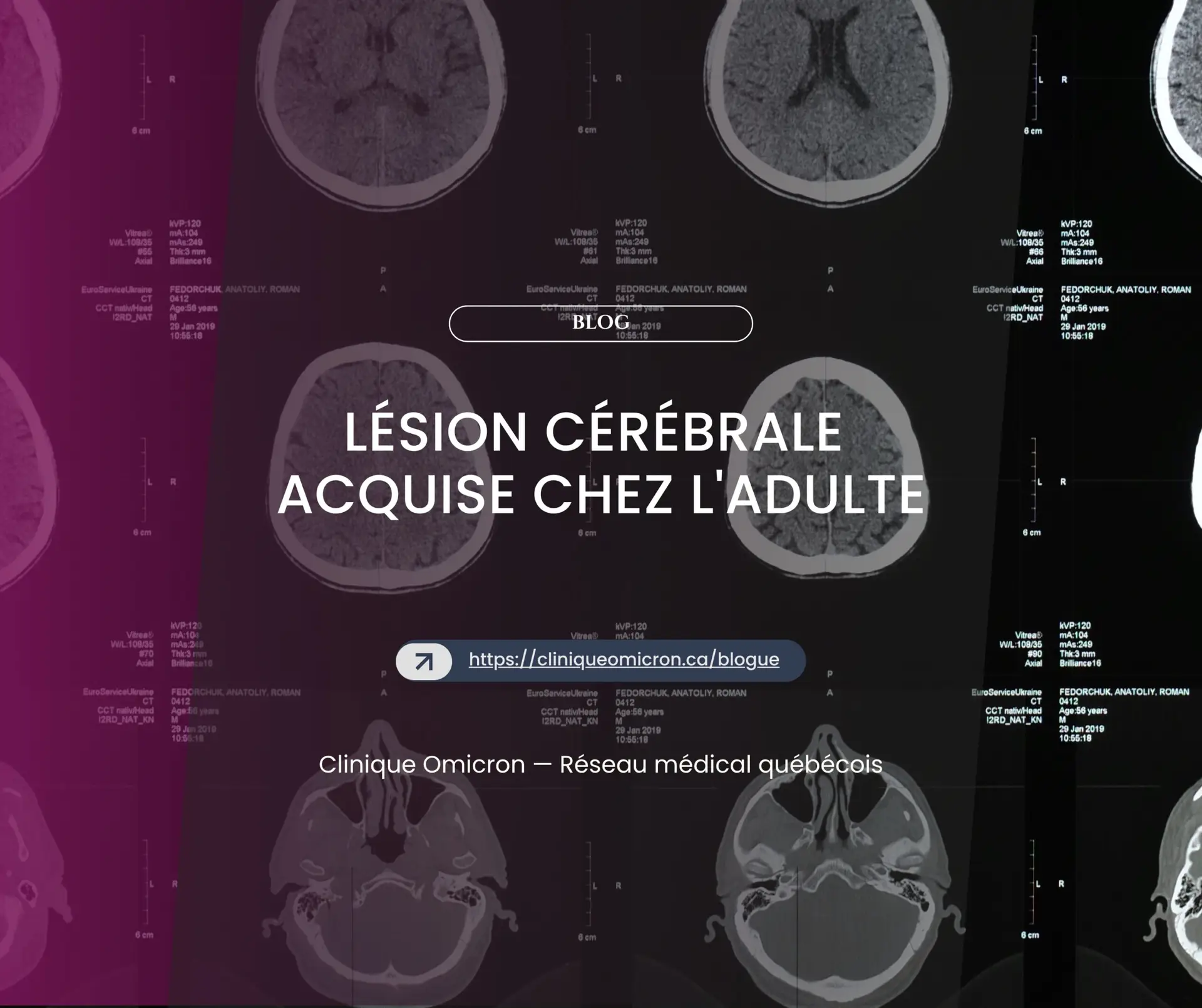

The acquired brain injury (ABI) includes any brain injury that occurs after birth: head trauma, stroke, cerebral anoxia, encephalitis, and tumors. According to Heart & Stroke Canada, tens of thousands of Quebecers are currently living with the aftereffects of these conditions [1]. The recovery is possible, often longer than one might imagine, and the rehabilitation plays a decisive role. This article provides an overview of the causes, possible consequences, the rehabilitation process in Quebec, and the resources available to those affected and their loved ones.
On this page
- What is an acquired brain injury?
- What are the main causes?
- What are the possible long-term effects?
- How does the recovery process work?
- What is the rehabilitation process in Quebec?
- Who is on the multidisciplinary team?
- How can we support family members and caregivers?
- What resources are available in Quebec?
- When should you seek immediate medical attention?
- Myths and Misconceptions
- Frequently asked questions
- Sources
What is an acquired brain injury?
A acquired brain injury is, by definition, a brain disorder that is not neither congenital nor hereditary, but which occurs at some point after birth. It is therefore distinct from brain malformations present at birth and from neurodevelopmental disorders such as congenital cerebral palsy [2]. The term encompasses a wide variety of clinical conditions, the course and consequences of which depend on the cause, the area of the brain affected, and the speed of treatment.
Some Key Figures to Keep in Mind
- Tens of thousands of Quebecers live with the aftereffects of an ACL injury [1]
- Stroke is the most common cause of ACL injuries in adults in Canada [3]
- Traumatic Brain Injury (TBI) affects young adults and older adults in particular [4]
- The most active recovery period occurs within the first 6 to 12 months
- From functional gains However, they may continue for several years with appropriate rehabilitation
What are the main causes?
The Causes of Acquired Brain Injury There are many such factors, and they encompass all types of damage that can harm brain tissue after birth. They may include traumatic, vascular, anoxic, infectious, tumors or toxic.
The Major Categories of Causes
- Traumatic : traffic accidents, falls (especially among older adults), sports injuries, interpersonal violence
- Vascular : Ischemic stroke (blood clot) or hemorrhagic stroke (vascular rupture)
- Anoxic : cardiac arrest (resuscitated), drowning, severe poisoning, prolonged asphyxia
- Contagious : encephalitis, bacterial or viral meningitis
- Tumor-related : primary brain tumors or metastases
- Toxic : overdose, exposure to certain substances (carbon monoxide, solvents), chronic alcoholism
- Other : prolonged seizures, neurosurgical complications
The clinical distinction Distinguishing between traumatic and non-traumatic ACL injuries remains useful, as the profile of residual symptoms and the rehabilitation process may differ. In Quebec, the SAAQ and CNESST cover, respectively, LCA cases resulting from traffic accidents or workplace accidents, with dedicated rehabilitation programs.
What are the possible long-term effects?
The aftereffects of an acquired brain injury vary greatly from person to person. They depend on the affected area of the brain, the severity of the injury, the age at the time of the injury, family support, and the speed of access to rehabilitation. Some aftereffects are visible right away, while others appear or become apparent later.
Cognitive sequelae
- Warning : difficulty concentrating and filtering out distractions
- Thesis : forgetfulness, difficulty learning new information
- Executive Functions : planning, organization, decision-making
- Processing Speed delayed information
- Difficulties with Reasoning abstract thinking or problem-solving
Motor and Sensory Sequelae
- Weakness, paresis, or paralysis of a limb or one side of the body
- Balance Disorders and coordination
- Spasticity (involuntary muscle stiffness)
- Vision Problems, visual field, or hearing
- Changes in Sensitivity skin-related or painful
Language and Communication Impairments
- Aphasia : acquired language disorder (speech, comprehension, reading, writing)
- Dysarthria : articulation disorder, less clear speech
- Social Communication Difficulties : understanding humor, implied meaning, and nonverbal communication
Emotional and Behavioral Consequences
- Emotional lability (rapid, uncontrollable laughter or crying)
- Depression and anxiety, very common after ACL surgery
- Disinhibition, loss of social filters
- Irritability, impulsivity
- Personality Changes sometimes marked
- Apathy or loss of motivation
Chronic Cognitive and Physical Fatigue
The post-ACL fatigue is one of the most common and underrated aftereffects. It manifests as disproportionate exhaustion following cognitive or physical activities that seem ordinary. It can persist for several years and requires active management: planned breaks, strict sleep hygiene, and pacing one’s activities.
How does the recovery process work?
The Recovery from an acquired brain injury is based on a fundamental phenomenon: the brain plasticity. The brain has a remarkable ability to reorganize itself, rewire its connections, and mobilize other regions to compensate for those that have been damaged [5].
The Stages of Recovery
- The First 6 to 12 months Depending on the injury, this is the most active phase of recovery
- The brain plasticity allows other regions to gradually make up for the shortfall
- From functional gains may continue for several years, especially with intensive rehabilitation
- The Recovery is not linear : Progress is sometimes accompanied by plateaus or temporary setbacks
- L’intensity and consistency Rehabilitation factors are crucial
Key Takeaways
- The LCA covers any brain injury that has occurred after birth
- The main causes are stroke and head injury
- The cognitive, motor, and emotional sequelae often coexist
- The recovery is most active during the first 6 to 12 months
- The multidisciplinary rehabilitation is the cornerstone of care
- The support from loved ones and preventing caregiver burnout are essential
What is the rehabilitation process in Quebec?
The Rehabilitation Programs in Quebec is structured in several successive stages, from the acute phase through to social and occupational reintegration. The transition from one stage to the next depends on the individual’s clinical stability and needs [3][6].
Key Milestones
- Acute phase at a hospital, medical stabilization and initial treatment (neurosurgery if necessary)
- Intensive Functional Rehabilitation (URFI), at specialized centers such as the IRGLM in Montreal or the IRDPQ in Quebec City
- Outpatient Rehabilitation and community support
- Return Home with physical and organizational adjustments
- Social, educational, or professional reintegration depending on age and circumstances
- Long-term medical and psychosocial follow-up
Intensive and Outpatient Rehabilitation: What Sets Them Apart
| Type | Frame | Main Objective |
|---|---|---|
| Acute Inpatient Rehabilitation | Hospital Complex | Medical stabilization |
| Intensive Functional Rehabilitation (URFI) | Specialized Rehabilitation Center | Maximum Functional Recovery |
| Outpatient Rehabilitation | Outpatient, several sessions per week | Reinforcement of Learning, Independence |
| Community Support | Residence, organizations | Social Reintegration, Quality of Life |
Who is on the multidisciplinary team?
The Rehabilitation After an ACL Injury is, by definition, a team effort. Several professionals collaborate at different stages of the process, each with complementary goals.
Key Stakeholders
- Neurologist and physiatrist, diagnosis, specialized medical care, and management of long-term effects
- Physical Therapist, motor recovery, balance, spasticity management
- Occupational Therapist, independence in daily activities, assistive devices, accommodations
- Speech therapist, speech-language therapy (aphasia), speech therapy (dysarthria), and swallowing therapy
- Neuropsychologist, cognitive assessment, cognitive rehabilitation, compensatory strategies
- Psychologist, emotional support for the individual and their loved ones
- Social worker and reintegration counselor, administrative procedures, guidance, reintegration
- Registered Nurse, care, education, prevention of complications
- Family doctor, continuity of long-term follow-up, coordination of care
Are you caring for a loved one who has suffered an acquired brain injury and looking for a family doctor to ensure continuity of long-term care? Omicron Clinic provides post-LCA medical follow-up and referral to rehabilitation services when necessary. Make an appointment or opt for a teleconsultation.
How can we support family members and caregivers?
The acquired brain injury has such a profound impact on the lives of Neighbors. Spouses, parents, children, siblings: everyone must adjust their daily lives, their expectations, and sometimes their sense of family identity. Organizations in Quebec offer support, training, and respite for caregivers. The’caregiver burnout is a real risk that must be actively monitored [7].
Common Emotions Among Caregivers
- Mourning of the person «as they were before»
- Concern looking toward the future
- Frustration related to behavioral or cognitive changes
- Guilt to experience negative emotions
- Social isolation progressive
- Overload physical and emotional
Self-Care Strategies for Caregivers
- Use the respite services from the CLSC and community organizations
- Join a support group among caregivers facing the same reality
- Maintain one's own activities Social Activities and Recreation
- View their family doctor or a psychologist, if necessary
- Accept Help suggested by family and friends
- Learn More on the nature of the aftereffects to better understand behaviors
What resources are available in Quebec?
Several Quebec and Canadian resources are designed for people living with ALS and their loved ones. Early access to these resources can significantly improve the recovery process and quality of life.
Specific Organizations
- Heart & Stroke Canada, coeuretavc.ca, information, post-stroke support programs, resources for caregivers
- Quebec Association of Organizations for People with Traumatic Brain Injuries (RAPTCCQ), support, advocacy, local resources
- Brain Injury Canada, national resources and training programs
- Support for caregivers, 1 855 852-7784
Financial and Administrative Support
- SAAQ, Compensation and services in the event of a traffic accident
- CNESST, workplace accidents
- IVAC, compensation for victims of crime
- Quebec Pension Board, disability pension
- Support Program for People with Disabilities of Quebec
Rehabilitation Centers
- Gingras-Lindsay Rehabilitation Institute of Montreal (IRGLM)
- Quebec Institute for Physical Disability Rehabilitation (IRDPQ)
- Estrie Rehabilitation Center
- Marie-Enfant Rehabilitation Center (for children and teens)
- CLSC and community teams in physical health and neurology
When should you seek immediate medical attention?
Warning Signs : Call 911 or Go to the Emergency Room
- Weakness sudden on one side of the body
- Speech Disorder or a sudden impairment in comprehension
- Suddenly, a vision lost or duplicated
- Headaches very intense and sudden
- Sudden Confusion, disorientation, loss of consciousness
- Seizure news
- Projectile vomiting without a digestive cause
- Rapid deterioration of the neurological status in a person who is already affected
Regular Follow-up Appointment
- Onset of new symptoms cognitive or behavioral
- Aggravation a known complication
- Signs of Depression or anxiety
- Persistent fatigue sleep disorders
- Challenges in Reintegration academic or professional
- Need for coordination among several specialists
Myths and Misconceptions
«If recovery doesn't happen within the first year, it's over.»
False. Although the first year is the most dynamic, functional progress can continue for several years, especially with ongoing rehabilitation, a stimulating environment, and adequate support.
«The invisible aftereffects aren't really serious.»
False. Cognitive, emotional, and fatigue-related symptoms are often the most debilitating in daily life, even when a person seems to be «doing well» physically. They have a major impact on work, relationships, and quality of life.
«A change in personality is permanent.»
Nuanced. Some changes may persist, but many improve over time with cognitive-behavioral therapy and a supportive living environment. Support from loved ones plays a crucial role.
«LCA only applies to young people who've been in accidents.»
False. Acquired brain injury affects people of all ages. Among older adults, falls and strokes are the leading causes. Among children, head injuries and late-onset perinatal hypoxia are also common causes. No age group is spared.
«Complete rest is the best treatment.»
False. On the contrary, prolonged complete rest can actually slow down recovery. Modern rehabilitation emphasizes a gradual and structured resumption activities, supervised by professionals from the multidisciplinary team.
Frequently asked questions
How long does rehabilitation take after an ACL injury?
The duration varies greatly depending on the severity of the injury, the patient’s age, comorbidities, and the nature of the aftereffects. The intensive phase usually lasts from a few weeks to several months, followed by outpatient rehabilitation lasting from several months to several years. Medical follow-up, meanwhile, is often lifelong.
Is rehabilitation covered by the RAMQ?
Yes, rehabilitation at a specialized public facility is covered by the RAMQ. For traffic accidents or workplace accidents, the SAAQ or the CNESST also covers these services. At private clinics or CLSCs, depending on the region, wait times can be long, and some services are sometimes reimbursed by group insurance plans.
Is it possible to return to work after sustaining an acquired brain injury?
Yes, in many cases, but often with adjustments (reduced hours, modified tasks, adapted work environment). The return to work is planned in collaboration with the rehabilitation team, the attending physician, the employer, and, if applicable, the insurer or the SAAQ/CNESST. It can sometimes take several months.
Is it possible to drive again after an LCA?
It depends on the aftereffects. The SAAQ may require a medical evaluation and a functional driving assessment, sometimes using a simulator, before authorizing a return to driving. A specialized occupational therapy evaluation is often recommended. Returning to driving too soon without an evaluation is not recommended for everyone’s safety.
What should I do if my loved one refuses help or rehabilitation?
This situation is common, especially in cases of anosognosia (a lack of awareness of one’s deficits, which is common after an ACL injury). The primary care physician, neuropsychologist, and social worker can help redefine goals, reduce resistance, and gradually introduce support. Patience, consistency among the care team, and family support are essential.
Does LCA increase the risk of dementia later in life?
Some studies suggest that moderate-to-severe head trauma, especially if it is repeated (as is the case with some athletes), increases the risk of long-term neurocognitive disorders. This does not mean that a concussion inevitably leads to dementia, but it does warrant close neurological monitoring, a healthy lifestyle, and management of cardiovascular risk factors.
Sources
- Heart & Stroke Canada. Stroke in Canada : Data and Information for Families.
- Brain Injury Canada. Acquired Brain Injury : Definitions and Resources.
- Canadian Guidelines for Best Practices in Stroke Care. Post-Stroke Rehabilitation.
- INESSS : National Institute for Excellence in Health and Social Services. Traumatic Brain Injury : Clinical Tools.
- Ministry of Health and Social Services (MSSS). Rehabilitation and Traumatic Brain Injuries in Quebec.
- Quebec Association of Organizations for People with Traumatic Brain Injuries (RAPTCCQ). Resources and Support for People with Mental Health Conditions and Their Loved Ones.
- Support for Family Caregivers. Support for Caregivers in Quebec.
- Quebec Automobile Insurance Corporation (SAAQ). Compensation and Services in the Event of an Accident.
Medical consultation | Clinique Omicron
Omicron Clinic
Need to consult a doctor?
In-person or via telemedicine, anywhere in Quebec.
We accept insurance. Telemedicine consultations available 7 days a week. No family doctor required.