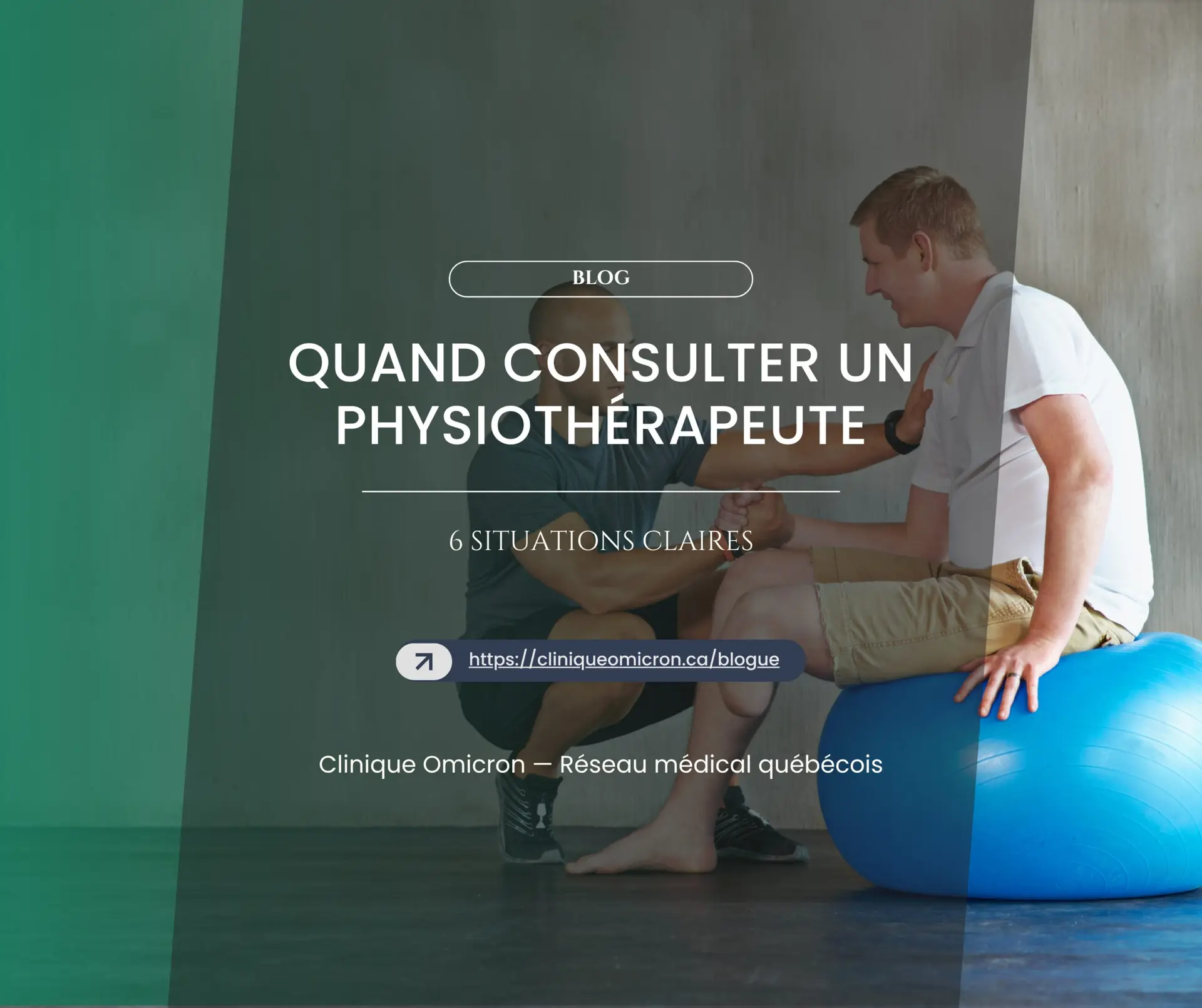

The physical therapist is a healthcare professional who specializes in the assessment and treatment of disorders musculoskeletal, neurological, and cardiorespiratory. In Quebec, you can consult it directly, without a doctor's prescription, since 2015 [1]. Here are six situations in which early consultation makes a real difference in recovery and quality of life, what happens during an initial appointment, and how access and reimbursement work.
On this page
- 1. Pain that lasts longer than a few weeks
- 2. After an acute injury
- 3. Postoperative Rehabilitation
- 4. Dizziness and balance problems
- 5. Chronic respiratory diseases
- 6. Prevention and Performance
- What Is the First Session Like?
- Direct Access and Reimbursement in Quebec
- Myths and Misconceptions
- Frequently asked questions
- Sources
1. Pain that lasts longer than a few weeks
A lower back, neck, shoulder, or knee pain which lasts longer than 2 to 4 weeks deserves an evaluation. The physical therapist Identify the cause (muscular, joint, postural, nervous), develop a treatment plan, and teach targeted exercises.
The Most Commonly Assessed Types of Pain
- Lumbago chronic or recurring
- Cervicalgia, neck stiffness or headaches of cervical origin
- Tendinopathies of the shoulder (rotator cuff)
- Pain At the knee (patellar, meniscus, osteoarthritis)
- Sciatica and radiculopathies
- Pain hip, foot (plantar fasciitis), wrist
- Tendinopathy of the Achilles tendon
- Pain postpartum (pelvic floor, back, pelvis)
Why Seek Early Care
- Avoid the chronification of pain
- Limit compensations that worsen the disorders
- Permit to quickly resume usual activities
- Reduced the use of pain medication
- Decrease absenteeism and extended leave
- Optimize sleep quality and mood, which are often affected by pain
Key Takeaways
- L’direct access physiotherapists are allowed in Quebec since 2015 [1]
- The physical therapy It doesn't just treat sports injuries: it also covers neurological, respiratory, vestibular, and post-operative disorders.
- A persistent pain longer than 2 to 4 weeks warrants an evaluation
- The RAMQ Does not cover private clinic physiotherapy, except for special cases
- Most of the group insurance reimburse private physiotherapy
- The CNESST and SAAQ cover care related to a recognized accident
2. After an acute injury
Sprains, muscle tears, acute tendinopathies: a early intervention accelerates recovery and reduces the risk of recurrence or chronicity [4].
The Most Common Acute Injuries Treated in Physical Therapy
- Sprain from the ankle, the knee, the wrist
- Tear muscular (hamstrings, calf, quadriceps, adductors)
- Tendinopathies acute or exacerbations
- Bursitis, capsulitis
- Whiplash whiplash
- Lumbago acute
- Fracture stabilized after medical evaluation
When to See a Doctor Before or at the Same Time
- Suspicion of fracture, dislocation, or luxation
- Pain very important, poorly relieved
- Edema major, extensive hematoma, visible deformity
- Loss by force or significant sensitivity
- Fever infectious signs
- Background that justify imaging (X-ray, ultrasound, MRI)
- Accident covered by the CNESST or the SAAQ
3. Postoperative Rehabilitation
Hip and knee replacements, shoulder surgery, knee ligament reconstruction (ACL), back surgery: the postoperative rehabilitation conditioned significantly affect the final result. The physiotherapist works according to the surgeon's protocols.
Rehabilitation Goals
- Minimize swelling, pain, and inflammation
- Recover Joint amplitudes
- Reinforce musculature
- Improve Walking and Balance
- Find functional activities (stairs, sports, work)
- Prevent complications (stiffness, chronic loss of strength, residual pain)
- Accompany the return to sports or professional activities
Effective rehabilitation is structured
- A Phased plan according to healing times
- From clinic visits combined with a home program
- A progression measured by functional tests
- A communication with the surgeon or the attending physician as needed
- A final evaluation to authorize the return to risky activities
4. Dizziness and balance problems
The benign paroxysmal positional vertigo (BPPV) and several vestibular disorders benefit from a vestibular rehabilitation by a trained physiotherapist. Many patients are unaware that physiotherapy can treat these types of problems [4].
Situations often supported
- VPPB (very brief vertigo triggered by changes in head position)
- Dizziness Persistent after an infection (vestibular neuritis)
- Dizziness post-commotion syndrome or mild traumatic brain injury
- Imbalance Chronic condition in the elderly (fear of falling)
- Dizziness and vestibular migraine (in consultation with the doctor)
- Rehabilitation after ENT surgery
When to seek immediate medical attention (red flags)
- Dizziness Severe, accompanied by neurological disorders (numbness, paralysis, difficulty speaking)
- Hearing loss brusque associate
- Headaches Intense and unusual
- Loss of consciousness fainting
- Dizziness after a severe traumatic brain injury
- Fever or infectious signs associated
5. Chronic respiratory diseases
COPD, severe asthma, post-COVID, cystic fibrosis, bronchiectasis: the respiratory physical therapy improve exercise capacity, drainage of secretions and quality of life. It complements medical treatment without replacing it.
What Respiratory Physical Therapy Can Offer
- Techniques drainage of secretions
- Rehabilitation respiratory (breathing, posture, dyspnea control)
- Exercise-Based Rehabilitation progressive
- Therapeutic Education (crisis management, inhalation techniques)
- Support home oxygen therapy, if prescribed
- Post-COVID Rehabilitation if symptoms persist (fatigue, shortness of breath, exercise intolerance)
Documented Benefits
- Improvement exercise tolerance and walking distance
- Decrease hospitalizations for exacerbation
- Improvement Health-related quality of life
- Discount anxiety related to shortness of breath
- Reinforcement adherence to medication regimens
6. Prevention and Performance
Physical Therapy is not limited to injury. She also plays a key role in prevention Among athletes, workers, and people at risk of falling.
Among athletes
- Biomechanical Assessment sportsmanship
- Analysis of running, jumping, or throwing
- Exercise Program targeted (mobility, stability, strengthening)
- Preparation competitions and training load planning
- Prevention relapses after injury
- Support On the return to progressive sport
Among workers
- Ergonomics from the workstation (desk, handling, standing)
- Program Active breaks and stretching in the workplace
- Prevention musculoskeletal disorders (MSDs) in office workers
- Evaluation work from home job
- Support Related to a return to work after disability
- Accompaniment in a CNESST process, if applicable
Among the elderly
- Fall Prevention through balance and strength training
- Maintenance functional independence
- Rehabilitation walking after hospitalization
- Tracking related to a loss of mobility
- Support home care in collaboration with other professionals
What Is the First Session Like?
Many people are reluctant to seek medical advice because they don't know What to Expect. Here are the main steps for a first meeting.
The Typical Process
- Medical History detailed: pain history, medical history, medications, activities, expectations
- Physical examination Posture, range of motion, strength, sensitivity, balance, specific tests
- Clinical Hypotheses and explanation of results
- Treatment plan customized (goals, frequency, duration)
- Initial Responses (mobilizations, exercises, advice, manual techniques, electrotherapy as needed)
- Exercise Program to do at home
- Planning Follow-up and progress criteria
How many sessions? How long?
- Variable according to the pattern, severity, and chronicity
- A first session usually last 45 to 60 minutes
- The upcoming sessions often last 30 to 45 minutes
- Several problems ailments are resolved in a few sessions
- The chronicles tables postoperative patients often require a longer program
- Observance at-home exercises greatly influence the total duration
Direct Access and Reimbursement in Quebec
L’direct access to the physiotherapist (without a doctor's prescription) has been permitted in Quebec since 2015 [1]. The refund However, this depends on the clinical context and insurance coverage.
The Main Repayment Scenarios
- The RAMQ Does not cover private clinic services, except in specific cases (public institution, CLSC, rehabilitation program after an eligible condition)
- Most of the group insurance reimburse private physiotherapy, partially or in full, with an annual limit
- The CNESST Covers care related to a recognized work-related injury [2]
- The SAAQ Covers care related to a recognized car accident [3]
- Some clinics hospitals offer free rehabilitation programs, subject to conditions and with variable timelines
Summary Table
| Situation | Coverage | Typical access time |
|---|---|---|
| Common Pain in Private Practice | Often paid for by the patient or group insurance | Usually short |
| Postoperative Care in a Public Program | RAMQ based on the criteria | Variable, sometimes prolonged |
| Workplace accident | CNESST if the injury is recognized | According to the supplier network |
| Car accident | SAAQ recognized file | According to the supplier network |
| Telerehabilitation | Often covered by insurance | Very short |
Are you hesitant to see a doctor about lingering pain or getting back to your activities? Omicron Clinic evaluates musculoskeletal pain, orders imaging when necessary, and refers patients to physical therapy or a specialist as appropriate. Make an appointment or opt for the teleconsultation for a first assessment.
Myths and Misconceptions
«If I haven't had an accident, physical therapy is pointless.»
False. A large part of physiotherapy consultations concern pain chronological or progressive (low back pain, neck pain, tendinopathies, osteoarthritis), postural disorders, respiratory problems, or dizziness. Physiotherapy is a tool for comprehensive management, not just post-injury.
«Complete rest is the best solution.»
False in most cases. For many musculoskeletal disorders, appropriate movement is more beneficial than prolonged inactivity. The physical therapist guides patients toward the right exercises, at the right intensity, at the right time.
«Pain always goes away on its own eventually.»
Nuanced. Some types of pain resolve on their own. However, many persistent pains, especially those lasting more than 2 to 4 weeks, tend to become chronic without treatment. Early evaluation is precisely what helps prevent this progression to chronicity.
«The RAMQ covers physical therapy»
Partially true. The RAMQ covers certain services provided in public facilities (CLSCs, hospitals, rehabilitation programs), often subject to eligibility criteria and waiting periods. In private clinics, the cost of the service is generally borne by the patient or their group insurance plan. The CNESST or the SAAQ covers care once a claim has been approved.
«One session is all it takes»
Not always. Some very specific problems (such as VPPB) can improve quickly in just one or two sessions. Most musculoskeletal disorders, however, require a treatment plan involving several sessions, combined with a home exercise program to consolidate the results.
Frequently asked questions
Do you need a doctor's referral to see a physical therapist in Quebec?
No. Direct access has been allowed since 2015. However, some insurance providers or programs (CNESST, SAAQ, and RAMQ for certain services) require a referral or medical records for reimbursement. It’s a good idea to check the terms and conditions with your insurer or the relevant program before your appointment.
Can a physical therapist order tests?
In certain situations, a physical therapist may recommend imaging or refer the patient to a doctor for a referral. The authority to order tests remains limited compared to that of a doctor. It is common practice to work in collaboration with the patient’s primary care physician.
How many sessions should I plan for?
It depends on the cause. For BPPV or recent acute pain, a few sessions may be sufficient. For chronic low back pain, established tendinopathy, or postoperative rehabilitation, it’s common to have several sessions spread out over a few weeks to a few months. The treatment plan is finalized after the initial evaluation.
Does physical therapy hurt?
Certain exercises or movements may cause temporary discomfort, but properly administered physical therapy should not cause severe pain or lead to long-term worsening of symptoms. The progression of treatment is adjusted according to the patient’s tolerance.
Can physical therapy be provided via teleconsultation?
Yes, in several situations. The telerehabilitation is useful for follow-up care, teaching exercises, adjusting home exercise programs, and certain types of care (chronic pain, return to work, postoperative follow-up). Sessions that require manual techniques or mobilization must be conducted in person.
How can I find out if my insurance covers physical therapy?
You should review the coverage schedule for your group or individual insurance plan. Most plans specify a maximum amount per session, a maximum number of sessions per year, and sometimes require a doctor’s referral. It is essential to request an official receipt at each session to ensure reimbursement.
Sources
- Quebec Professional Order of Physiotherapy (OPPQ). Direct Admission and Scope of Practice in Physical Therapy.
- CNESST : Commission on Occupational Standards, Equity, Health, and Safety. Rehabilitation Programs Following a Work-Related Injury.
- SAAQ : Quebec Automobile Insurance Corporation. Compensation and Services Following a Traffic Accident.
- INESSS : National Institute for Excellence in Health and Social Services. Rehabilitation Practice Guidelines.
- Canadian Physiotherapy Association. Information on Physical Therapy Services.
- WHO : World Health Organization. The Importance of Rehabilitation Care.
- RAMQ : Quebec Health Insurance Board. Physical Therapy Services Covered.
Medical consultation | Clinique Omicron
Omicron Clinic
Need to consult a doctor?
In-person or via telemedicine, anywhere in Quebec.
We accept insurance. Telemedicine consultations available 7 days a week. No family doctor required.