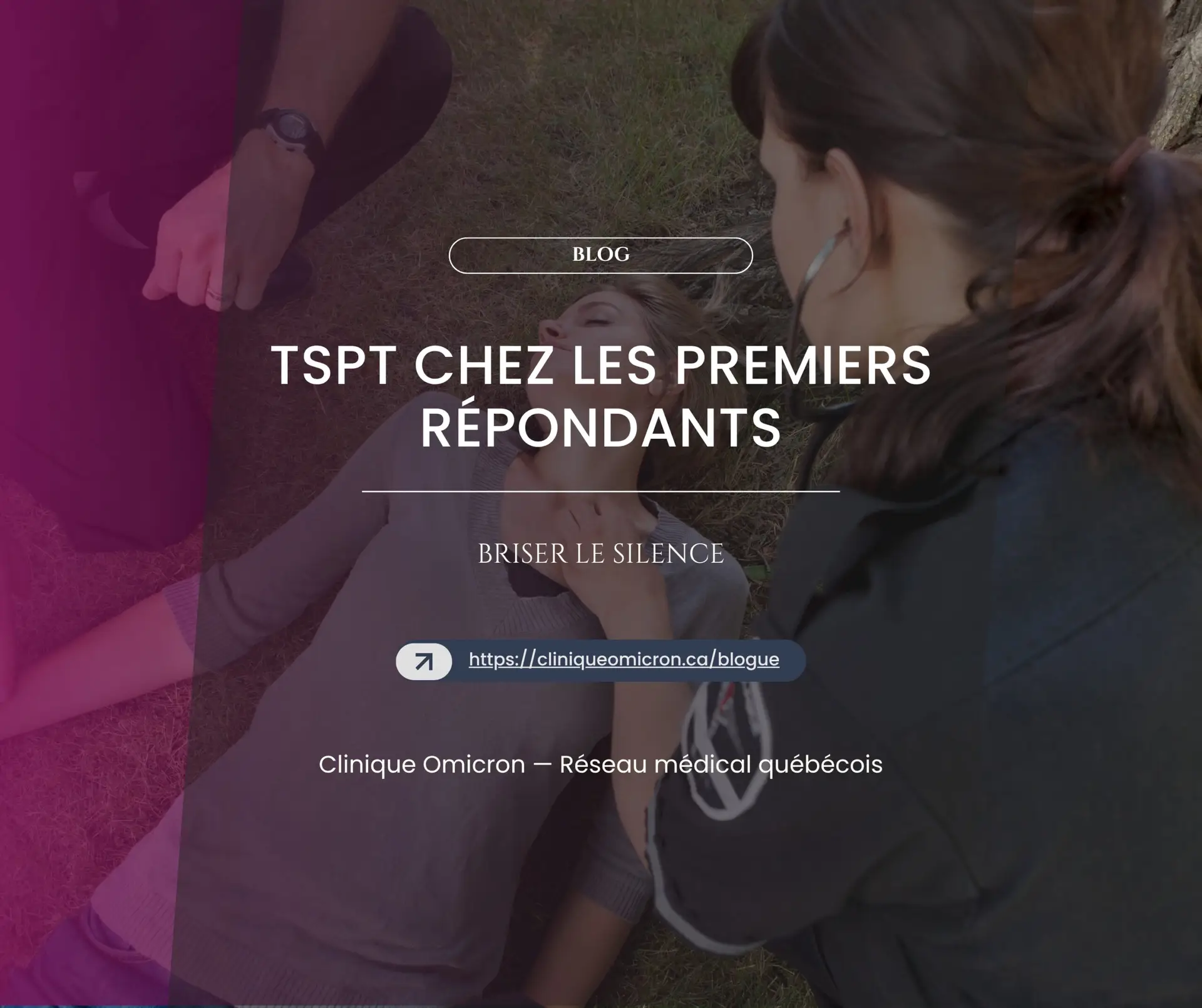

The post-traumatic stress disorder (PTSD) is a prolonged reaction to a traumatic event [1]. It does not affect not just veterans : Accidents, assaults, sudden bereavements, medical trauma, domestic violence, and witnessing a shocking event can trigger it. Today, it is recognized as a disorder well-defined according to the DSM-5, and most importantly: it is treated. This article provides an overview of diagnostic criteria, risk factors, proven treatments, resources in Quebec, and helpful tips for yourself or a loved one.
On this page
- The DSM-5 Criteria
- Who is affected and why?
- The Different Types of Trauma
- Proven Treatments
- The Role of Medication
- When to consult
- Quebec Resources
- Support for Family Members
- PTSD in Children and Adolescents
- Myths and Misconceptions
- Frequently asked questions
- Sources
The DSM-5 Criteria
The DSM-5 (Diagnostic and Statistical Manual of Mental Disorders) defines PTSD as specific criteria that must be present for a diagnosis to be made [2].
The Main Criteria
- Exposition a traumatic event (experienced firsthand, witnessed firsthand, learning that a loved one was exposed to it, or repeated exposure, as in the case of first responders)
- Revivals : flashbacks, nightmares, involuntary intrusions of memories
- Avoidance persistent exposure to stimuli that remind the person of the trauma (thoughts, places, people, conversations)
- Cognitive and mood changes: negative beliefs, distortions, detachment, anhedonia, inability to recall certain aspects
- Hypervigilance : startle responses, irritability, sleep and concentration problems, nervous system hyperactivity
- Symptoms Present more than a month
- Suffering significant or functional impact
- Not attributable to any other cause (substance, other medical condition)
Subforms
- PTSD with dissociation : marked derealization or depersonalization
- Delayed-onset PTSD : criteria fully met at least 6 months after the event
- Complex PTSD (recognized in the ICD-11 but not classified as a separate disorder in the DSM-5): chronic trauma, often interpersonal in nature and beginning in childhood
- PTSD in Children Under 6 years old: age-appropriate criteria
Key Takeaways
- The PTSD is a prolonged reaction to a traumatic event, defined by specific criteria in the DSM-5
- It touches 5 to 10 % people exposed to a traumatic event, with the extent depending on the nature and intensity of the event
- Several proven treatments exist: Trauma-Focused Cognitive Behavioral Therapy (TF-CBT), EMDR, prolonged exposure therapy, Cognitive Processing Therapy (CPT)
- The ISRS and IRSN (sertraline, paroxetine, venlafaxine) are the first-line adjunctive medications
- The cannabis and benzodiazepines long-term are generally not recommended on the front lines
- The resources There are many resources available in Quebec: Info-Social 811 (option 2), CAVAC, SOS Domestic Violence, programs for veterans and first responders
- From symptoms Symptoms that persist for more than a month after a traumatic event warrant a medical consultation
- In case of’suicidal thoughts, seek medical attention immediately (Info-Social 811, option 2, 1-866-APPELLE, emergency)
Who is affected and why?
The majority People who have been exposed to a traumatic event exhibit acute reactions (sleep disturbances, anxiety, intrusive thoughts) that resolve themselves in a few weeks. PTSD occurs in about 5 to 10 % among exposed individuals, varying depending on the nature, intensity, and personal factors [3].
Risk factors
- Nature of the Trauma : Interpersonal trauma (assault, rape, domestic violence) poses a greater risk than natural disasters
- Intensity and duration of exposure
- Repeated trauma or childhood
- Background personal or family psychiatric issues
- Background from previous trauma
- Missing social support
- Poverty, marginalization, housing instability
- Substances psychoactive substances at the time of the trauma
- Gender : Women are at greater risk, in part because of the type of trauma they have experienced
- Presence of others medical conditions or serious injuries
Protective Factors
- Social Support immediate and long-lasting
- Ability to give meaning at the event
- Access to care fast and competent
- Resources past personal issues (mental health, finances, relationships)
- Recognition and validation of suffering
- Early Intervention appropriate
- Absence of stigmatization
Common Comorbidities
- Depression major
- Anxiety Disorders (generalized anxiety disorder, panic disorder)
- Substance Use Disorders
- Disorders of the sleep
- Pain columns, headaches
- Personality Disorders in certain cases of complex trauma
- Risk suicidal increased
- Terms and Conditions medical related to chronic stress
The Different Types of Trauma
Single Acute Traumas
- Accidents traffic accidents, workplace accidents
- Witness to a event violent
- Assault physical assault, robbery
- Disasters natural disasters (storms, floods)
- Trauma medical (surgery, serious diagnosis, intensive care)
- Death abusive or violent behavior by a loved one
Interpersonal Trauma
- Sexual Assault, rape
- Domestic Violence and coercion
- Abuse childhood (physical, sexual, psychological, neglect)
- Harassment severe and persistent
- Witness domestic violence
- Often associated with a Complex PTSD
Repeated and Work-Related Trauma
- First Responders : firefighters, police officers, EMTs, paramedics
- Staff healthcare providers (emergency room staff, nurses, doctors)
- Veterans and active members of the Canadian Armed Forces
- Journalists in conflict zones
- Workers social workers and child welfare professionals
- Community members marginalized
- People female refugees and survivors of torture
- Vicarious trauma : indirect but repeated exposure to traumatic stories
Specific Traumas
- Traumatic Grief (complicated grief following a sudden or violent loss)
- Medical Trauma : cancer diagnosis, stay in the intensive care unit, aggressive treatments
- Traumatic Childbirth
- Pandemic : prolonged exposure to fear, loss, and stress
- Collective Trauma : Notable community events
Proven Treatments
Several psychotherapies trauma-specific interventions have demonstrated their effectiveness. They are recommended as first-line treatments by international guidelines [4].
Trauma-Focused Cognitive Behavioral Therapy (TF-CBT)
- Structured Approach, for a limited time (8 to 20 sessions)
- Work on the thoughts, behaviors and emotions related to trauma
- Psychoeducation About PTSD
- Cognitive Restructuring dysfunctional beliefs
- Techniques for’exhibition marked by memories and situations that have been avoided
- Strategies for management anxiety and sleep
- Map of prevention relapses
EMDR (Eye Movement Desensitization and Reprocessing)
- Approach structured in 8 phases
- Uses bilateral stimulation (eye movements, sounds, tapping)
- Allows the reprocessing traumatic memories
- Proven effectiveness by several studies
- Often fast: a few sessions may be sufficient for a single traumatic event
- Approach longer for complex trauma
- Practitioners certified in Quebec (search via the OPQ or professional associations)
Prolonged Exposure Therapy
- Approach structured, usually 8 to 15 sessions
- Includes a imaginary exhibition a traumatic memory
- Includes a in vivo exposure situations that were avoided
- Psychoeducation and management techniques
- Proved efficient for many types of trauma
- Request a commitment on the part of the patient
Cognitive Processing Therapy (CPT)
- Approach in 12 sessions structured
- Spotlight on the thoughts trauma-related issues and their impact
- Identification «stuck points»
- Particularly effective for trauma involving strong negative beliefs (guilt, shame)
- Approved for veterans and survivors of sexual assault
Other approaches
- Narrative Exposure Therapy (NET) : A Narrative Approach to Multiple and Complex Trauma
- Approaches somatic (Somatic Experiencing, sensorimotor psychotherapy)
- Approaches based on the mindfulness and compassion
- Trauma-Focused Yoga in addition
- Approaches group in some contexts
- Therapies support non-specific, useful but less effective on their own
Comparison Table of the Main Approaches
| Approach | Duration | Principle |
|---|---|---|
| TCC-T | 8–20 sessions | Work on thoughts, emotions, and exposure |
| EMDR | Variable (often short) | Bilateral stimulation to reprocess memories |
| Extended Exhibition | 8–15 sessions | An Imaginary and In Vivo Exhibition |
| CPT | 12 sessions | Restructuring Beliefs Related to Trauma |
| NET | Variable | A Chronological Account of Multiple Traumas |
The Role of Medication
First Line: SSRI and SNRI
- Sertraline and paroxetine : only SSRIs specifically approved for PTSD in Canada
- Venlafaxine (IRSN): a well-documented alternative
- Other SSRIS used off-label with supporting data (fluoxetine, escitalopram)
- Visible results are often seen after 4 to 8 weeks
- Treatment duration: at least 12 months after improvement
- Well tolerated by a majority
- Possible side effects: digestive problems, sleep, sexual function
Adjuvant medications
- Prazosin : for trauma-related nightmares (effectiveness varies according to recent studies)
- Mirtazapine : helpful for severe insomnia
- Antipsychotics at low doses in certain specific situations (risperidone, quetiapine), under strict supervision
- Beta-blockers (propranolol) in cases of acute physical anxiety
- Gabapentin or topiramate in some cases
Substances to Avoid or Use with Caution
- Cannabis : generally not recommended on the front lines can exacerbate anxiety and avoidance
- Benzodiazepines in the long run: generally not recommended, can hinder recovery and lead to addiction
- Alcohol : Use should be limited; often used for self-medication
- Drugs recreational
- Benzodiazepines can be used very occasionally in acute situations, under supervision
Emerging Approaches
- MDMA-assisted In psychotherapy: active research; access through clinical trials in the United States and Canada
- Psilocybin In psychotherapy: ongoing research
- Esketamine : approved for treatment-resistant depression; currently being evaluated for certain types of trauma
- Repetitive Transcranial Magnetic Stimulation (rTMS) : an alternative in cases of resistance to standard treatments
- These approaches are not not yet standard common practice in Quebec in 2026
When to consult
Signs That Indicate You Should See a Doctor
- Persistent symptoms more than a month after a traumatic event
- Nightmares, flashbacks that disrupt daily life
- Marked avoidance that limits one's life (work, relationships, activities)
- Increased consumption of’alcohol or drugs to manage anxiety
- Sense of Being «on guard» at all times
- Disorders of the sleep adults
- Irritability or anger that affects relationships
- A feeling of’emotional numbness
- Challenges of concentration at work or in school
- Suicidal thoughts, urgent consultation
Who to Contact
- Family doctor or IPS for initial assessment
- Psychologist specializing in trauma (OPQ)
- Psychiatrist in complex or difficult cases
- CAVAC (Crime Victims Assistance Center) if criminal trauma
- SOS Domestic Violence if domestic violence
- Specialized Programs for veterans, first responders
- Info-Social 811, option 2 for orientation
- CLSC for psychosocial services
In case of emergency
- 911 in the event of immediate danger or a suicidal crisis with a plan
- 1 866 APPELLE (1-866-277-3553) if you are having suicidal thoughts
- Info-Social 811, option 2 in case of an emergency
- Emergency hospital care in the event of a major crisis
- Do not to be alone in cases of acute distress
Are you dealing with a recent or past traumatic event and would like to talk to a doctor about it? Omicron Clinic offers medical evaluation for PTSD, treatment prescriptions, and referrals to psychotherapists specializing in trauma at our locations in Quebec, with teleconsultations available. Make an appointment or opt for the teleconsultation.
Quebec Resources
Support Lines
- Info-Social 811, option 2, 24/7 psychosocial support
- 1 866 APPELLE (1-866-277-3553) : Crisis and Suicide Prevention
- CAVAC (Crime Victim Assistance Centers), 1 866 532-2822
- SOS Domestic Violence, 1 800 363-9010
- Sexual Assault Helpline, 1 888 933-9007
- Tel-aide (Montreal), 514 935-1101
- Tel-jeunes, 1 800 263-2266
- Kids Help Phone, 1 800 668-6868
Specialized Organizations
- Crime Victim Assistance Centers (CAVAC) in each region
- CALACS (Centers for Assistance and Prevention of Sexual Assault)
- Shelter Homes for women who are victims of domestic violence
- Suicide Prevention Centers regional
- Ordre des psychologues du Québec (OPQ), directory of psychologists specializing in trauma
- EMDR Canada and EMDR associations in Quebec
- Trauma Research Center (University of Montreal, Sacré-Cœur Hospital)
- Tracom (Crisis Prevention and Intervention Center) for certain types of trauma
For veterans and first responders
- Veterans Affairs Canada : Programs and Compensation for Veterans
- Military Family Support Service of Quebec
- Programs specific training for firefighters, police officers, and paramedics in various departments
- OSI Canada (Organization for Support of Operational Stress Injuries)
- Employee Assistance Program (PAE) specific to each department
- Specialized Clinics in military and operational trauma
- Compass / Wounded Warriors Canada
Access to Psychotherapy
- PQPTM (Quebec Mental Health Program), free access based on eligibility criteria
- Psychologists in private practice (partially covered by group insurance)
- Social workers and licensed psychotherapists
- Directory of the’OPQ : opq.org
- Tax Credit for medical expenses applicable
- Teletherapy growing, expanding access
Support for Family Members
How to Support a Loved One
- Listen without judging, without downplaying
- Recognize suffering as legitimate
- Respect a person's rhythm
- Do not force talking about trauma
- Maintain a regular attendance without being intrusive
- Encourage consultation, without imposing
- Understanding that the healing takes time
- Recognize the triggers and help manage them
- Take care of oneself also
What to Avoid
- Say «We need to move on.» or «It’s been a long time»
- Minimize or compare the trauma to other situations
- Push to recount the details of the trauma
- Make promises impossible to keep
- Overinvesting to the point of exhaustion
- Cut Making contact when you're overtaken without explaining why
- Try to treat instead of professionals
Resources for Family Members and Friends
- Support for caregivers : 1 855 852-7784
- Support groups for spouses, parents and friends of people with PTSD
- Support psychological for loved ones
- Employee Assistance Program (EAP) if available
- Information about the vicarious trauma and compassion fatigue
PTSD in Children and Adolescents
Special features
- The PTSD can occur in children of any age
- Symptoms often different from those of adults: regression, repetitive reenactment of the trauma, sleep disturbances, physical pain, withdrawal
- The young children may not have the words to express their suffering
- Diagnostic criteria adapted in the DSM-5 for children under 6 years of age
- L’family environment and education is essential
- The parental support has a significant impact on the prognosis
Appropriate Treatments
- TF-CBT (Trauma-Focused CBT): a validated, structured approach for children and adolescents
- EMDR suitable for children
- Approaches through play among the youngest
- Involvement of the parents in treatment
- Support school-related and collaboration with the school
- Medication used more cautiously, generally as a supplement
Specific Resources
- Tel-jeunes : 1 800 263-2266
- Kids Help Phone : 1 800 668-6868
- Open Area for ages 12–25
- Pediatric University Hospitals (Sainte-Justine, Québec University Hospital), teams specializing in child and adolescent psychiatry
- CIUSSS and CLSCs for community-based services
- Programs in youth protection when appropriate
Myths and Misconceptions
«PTSD is only for veterans»
False. The PTSD may occur after any exhibition a traumatic event: assault, accident, sudden bereavement, sexual assault, domestic violence, medical trauma, or witnessing a violent event. The survivors of sexual assault actually have one of the highest rates of PTSD.
«You have to be strong; it'll all work out on its own.»
False. The acute symptoms often go away on their own, but when they persist more than a month, they report a PTSD which rarely resolves itself without help. The proven treatments improve the quality of life for most people. Wait On the contrary, it may cause the disorder to become chronic.
«Talking about the trauma will make things worse.»
False in a therapeutic setting. Visit structured therapy (CBT-T, EMDR, prolonged exposure), addressing trauma in a structured setting allows for reprocessing emotional well-being and healing. Outside a therapeutic setting, repeatedly recounting an experience can indeed perpetuate the suffering. The timing and context are crucial.
«Cannabis Helps with PTSD»
It's not that simple. Some people report a temporary relief, but studies show that the cannabis can perpetuate avoidance, exacerbate anxiety over the long term, and hinder recovery. It is not recommended on the front lines. The discussion Consulting a doctor is essential, especially when comorbidities are present.
«PTSD means you're crazy.»
False. The PTSD is a normal reaction to an abnormal event. The brain adapts to the trauma in a way that could be protective in a traumatic context, but which becomes disabling later on. Understanding this helps put things into perspective and motivates you to commit to treatment.
Frequently asked questions
How long after a traumatic event can PTSD develop?
Symptoms appear usually in the weeks following the event. A diagnosis of PTSD requires that symptoms persist more than a month. The Delayed-onset PTSD occurs later (at least 6 months later). Some people develop PTSD years after the trauma, sometimes triggered by an event that reminds the person of the initial trauma.
How long does the treatment last?
Variable. For a single trauma, approaches such as EMDR or CBT-T can be relatively short (a few weeks to a few months). For a complex trauma or comorbidities, treatment may last several months to years. If prescribed, medication is often continued for at least 12 months after improvement.
Does RAMQ cover psychotherapy for PTSD?
The psychotherapy in the public health care system (CLSCs, hospitals, PQPTM) is free of charge. For the victims of crime, CAVACs offer support, and certain services may be covered by IVAC (Compensation for Victims of Crime). For veterans, Veterans Affairs Canada covers services. In private practice, the group insurance often partially overlap.
Is EMDR really effective?
Yes, l'EMDR is an approach recommended by international guidebooks (WHO, ISTSS, NICE) for the treatment of PTSD. The studies show effectiveness comparable to CBT-T. The exact mechanism remains a matter of debate, but the results are solids. To be performed by a therapist trained and certified.
What should you do in the event of an acute crisis or a flashback?
Techniques for’anchor : Focus on your current physical sensations (five things you see, four you touch, three you hear, etc.). Breathing slow and deep. Remember that It's a memory, not the current reality. Contact from a nearby trusted. In the event of a prolonged crisis, contact Info-Social 811 (Option 2) or go to the emergency room.
Can PTSD be completely cured?
Yes, in most cases. The proven treatments enable most people to regain a satisfactory quality of life, often with the symptoms disappearing or being significantly reduced. Some people experience a « post-traumatic growth »": a shift in values, a new outlook on life. The prognosis is generally best with early intervention.
Sources
- American Psychiatric Association. DSM-5 : Diagnostic and Statistical Manual of Mental Disorders, 5th Editione edition.
- International Society for Traumatic Stress Studies (ISTSS). Guidelines for the Treatment of PTSD.
- Public Health Agency of Canada (PHAC). Data and Information on PTSD in Canada.
- Canadian Guidelines on PTSD : CMAJ, Specialized Programs.
- INESSS : National Institute for Excellence in Health and Social Services. Guides and Assessments on PTSD.
- Quebec Order of Psychologists (OPQ). Information on Trauma Psychotherapy.
- Veterans Affairs Canada. Programs and Support for Veterans.
Medical consultation | Clinique Omicron
Omicron Clinic
Need to consult a doctor?
In-person or via telemedicine, anywhere in Quebec.
We accept insurance. Telemedicine consultations available 7 days a week. No family doctor required.